
“We’re thinking of carpet tiles, so if the dog ruins one we just swap it.”
It’s a reasonable plan, and about half the time it’s the wrong one. Here’s the short answer: in bedrooms and living rooms, broadloom carpet wins — it’s softer, warmer, and usually cheaper by the time the tiles are actually on the floor. Tiles win where you know you’ll replace a patch: garages, home offices under a chair, rumpus rooms, rentals, pet zones — and almost every office.
The rest of this guide is the arithmetic, the part about underfoot feel that nobody mentions, and the three jobs where each one is clearly right.
The Price Maths Nobody Does
Carpet tiles look cheap because they’re priced per tile, and a tile is small.
The standard tile is 500 × 500 mm — four to a square metre. At the hardware store, entry-level polypropylene tiles were $9.80 each in September 2026, and 1 × 1 m tiles $25–34. So:
| What you’re buying | Price as advertised | Per m² |
|---|---|---|
| 500 × 500 mm tile | $9.80 each | $39.20/m², tiles only |
| 1 × 1 m tile | $25–34 each | $25–34/m², tiles only |
| Broadloom carpet, supplied and installed | — | $40–110/m², most jobs $65–100 |
Tile prices read from Australian hardware listings, September 2026. The broadloom band is our published supplied-and-installed pricing from our flooring and carpet cost guide, and it includes underlay, gripper, installation and trims.
Add adhesive, a trim at every doorway and your own weekend, and a DIY tile floor lands within a few dollars of a proper installed carpet — and that’s before the tiles you cut wrong. The saving isn’t in the buying. It’s in the replacing, and only if you actually replace tiles later.
Why Tiles Feel Harder Underfoot
This is the thing customers notice on day two, and it isn’t the carpet’s fault.
Broadloom goes down over underlay — $8–25/m² — and that layer is most of what people mean when they say carpet feels good. Carpet tiles are designed to be stuck straight to the floor: the cushioning is whatever is built into the tile’s backing, which is a fraction of a separate underlay. On a concrete slab, the difference is immediate.
There is no workaround, either. Underlay under carpet tiles lets them move and curl at the edges — the tile relies on being stuck to something solid. So if the room is one where people sit on the floor, walk barefoot or lie down — a bedroom, a nursery, a lounge — that’s an argument for broadloom that no price table captures.
Where Tiles Genuinely Win at Home
| Room | Why tiles |
|---|---|
| Garage, workshop | Oil, grit and one ruined square. Swap the square |
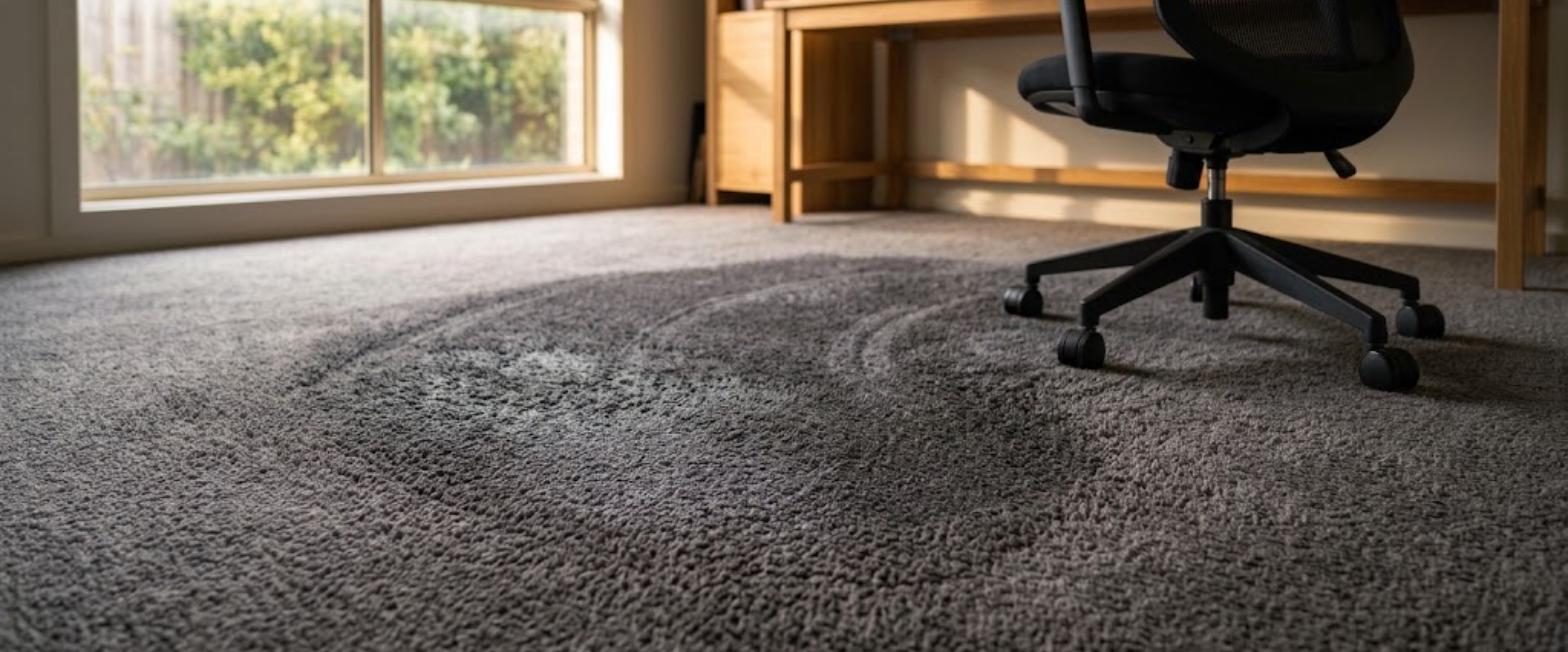
| Home office | The chair castor wears one patch, not the room |
| Rumpus or kids’ play room | Paint, texta, the science experiment |
| Rental property | Damage between tenants is a $10 fix, not a re-carpet |
| Pet zone, laundry entry | Lift, wash or replace the one that got sick on |
| Awkward shapes | Tiles waste far less than a roll — see the next section |
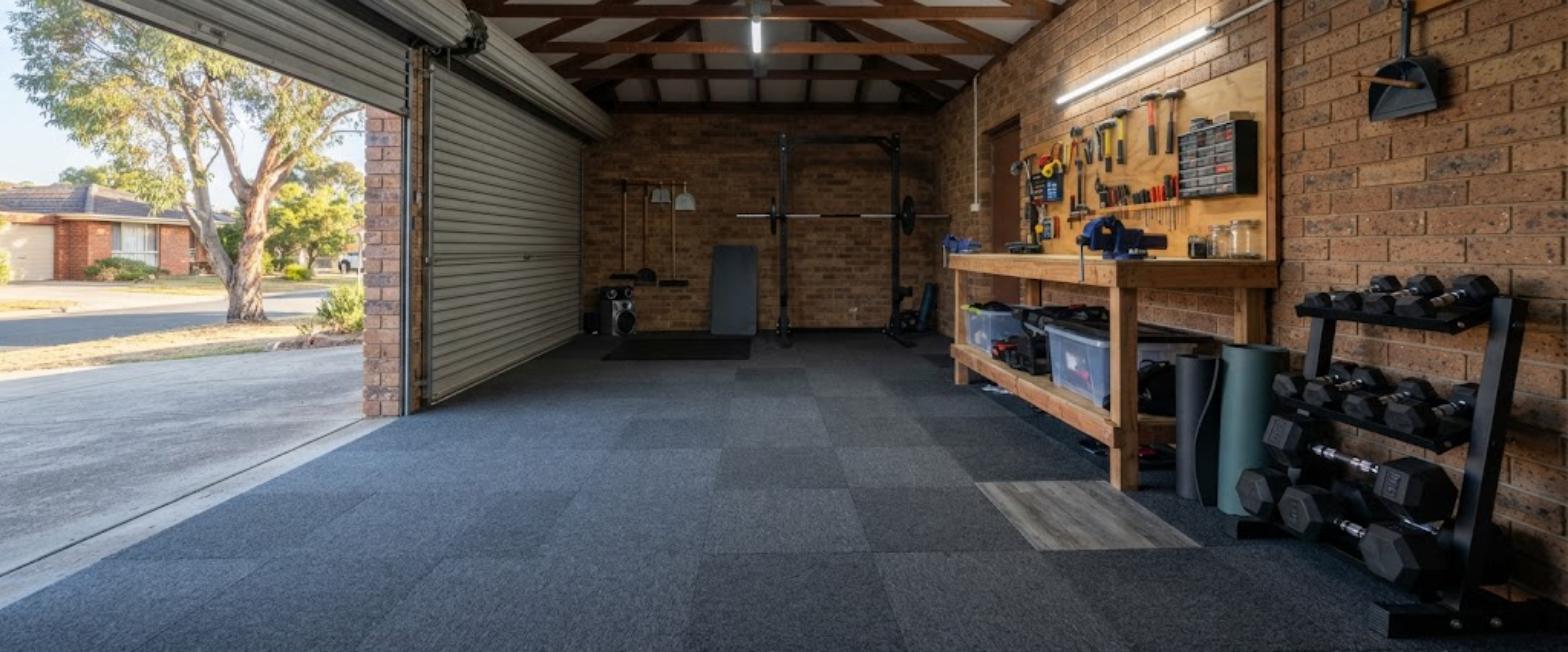
The theme: tiles are for floors you expect to damage. If you don’t expect to damage it, you’re paying for a feature you’ll never use.
Where Broadloom Wins
Bedrooms, living rooms, hallways and stairs. Seamless, softer, warmer, and no grid of joins across the middle of the room. It also handles the two things tiles are weakest at: bare feet and light.
Broadloom has its own quirk, and it’s in the cost guide: carpet comes on a 3.66 m wide roll, and you’re billed for the full width whether your room uses it or not. A 4.0 × 3.0 m room (12 m²) takes about 14.6 m² of carpet. In a room wider than 3.66 m — or with lots of angles and doorways — that wastage is real, and it’s the one case where tiles genuinely cost less in material.
On stairs, tiles are the wrong product. Stairs need a carpet rated at least 3 stars — Residential Heavy Duty — on the ACCS label, fitted over the nose of each step, and they’re priced per step at $80–140 supplied and laid. A tile edge on a stair nose is a trip hazard and it will lift.
The Replacement Problem — the Thing Everyone Forgets
The whole case for tiles is “just swap the damaged one”. That works exactly as long as you have matching tiles.
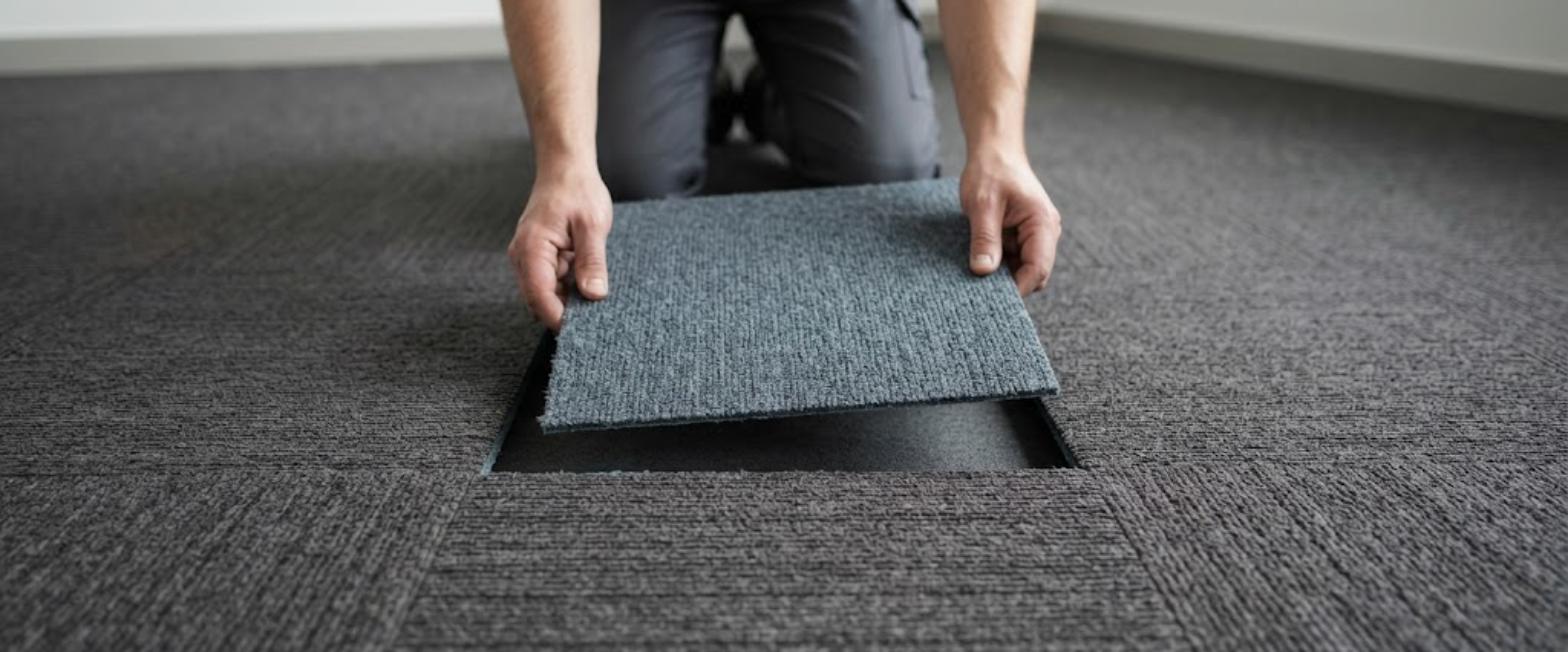
Carpet tiles are made in dye lots. A tile bought two years later, from the same range, in the same colour, will usually be a shade off — close enough in the box, obvious on the floor under a window. The fix costs almost nothing at order time: buy 5% extra and keep the spare tiles in the garage.
Two more things worth knowing, both from Australian manufacturers’ own installation guidelines:
- Every tile has directional arrows moulded into its backing. Laid all the same way (monolithic), a tile floor looks like broadloom but shows every traffic lane. Turned 90° tile by tile (quarter-turn), it hides wear and soiling. Decide before the first one goes down.
- You cannot lay carpet tiles over your existing carpet. Signature Floors’ guideline is explicit: existing carpet, underlay, loose-laid vinyl and old adhesive all have to come out first. Tiles go over concrete, timber and ceramic that’s been properly prepared — and on a slab, the moisture has to be checked with in-situ RH probes (ASTM F2170) before any adhesive goes down.
In an Office, the Answer Flips
Everything above is about homes. Put the same two products in a workplace and the maths inverts, because nobody in an office is lying on the floor and everybody is walking the same three metres to the lift.
Commercial broadloom is cheaper to buy than commercial carpet tile. It is still usually the wrong call, because tiles last 10–15 years against broadloom’s 7–10 in general office use, and a worn traffic lane costs twenty tiles instead of a whole floor. Over the life of the floor the tile works out cheaper per year, which is the number whoever signs the invoice actually pays.
That’s why almost every office you’ve worked in has tiles, and why almost no bedroom does. Our commercial flooring page has the full range if that’s the job you’re pricing.
In Sydney Specifically
Apartments. If you’re in a strata building, carpet is the floor that almost never needs approval — it meets the acoustic by-laws where a hard floor needs an acoustic underlay and paperwork. Tiles and broadloom both qualify; broadloom over good underlay performs better. Our guide to flooring in Sydney apartments explains the ratings.
The Hills. In the newer two-storey homes around Kellyville, Rouse Hill and Castle Hill, the job is usually bedrooms and a staircase, which is broadloom’s home ground. Our Castle Hill showroom has the ranges side by side.
The Northern Beaches. Sand is the enemy. It works into the pile in entries and hallways, and a dense, well-rated carpet plus a proper entry mat beats any product choice. Our Belrose showroom is the place to feel the difference between a $65 and a $100 carpet before you commit.
The Part That Costs Us Money
If you want twelve tiles for a garage floor, buy them at the hardware store. They’ll be cheaper than we can supply them, you can lay them yourself in an afternoon, and there is no job in it for us worth doing badly.
Come to us when it’s a room you’ll live in, a staircase, a whole home — or an office, where the tile maths actually works. That’s where a measure, the right underlay and a proper installation change the outcome, and where you’d notice the difference for the next ten years.
Frequently Asked Questions
Are carpet tiles cheaper than carpet?
Not usually, once both are on the floor. Entry tiles work out at about $39/m² in tiles alone (four 500 × 500 tiles at $9.80), before adhesive, trims and your labour. Installed broadloom starts at $40–70/m² with underlay, gripper and installation included.
Are carpet tiles good for bedrooms?
They’re durable, but they feel harder, because a tile is stuck straight to the floor and broadloom sits on $8–25/m² of underlay. For a bedroom, most people prefer the broadloom.
Can you put carpet tiles over existing carpet?
No. Australian manufacturers’ installation guidelines require the old carpet, underlay and adhesive to be removed first. Tiles need a firm, prepared subfloor — concrete, timber or ceramic — or they move and curl at the edges.
Can you put carpet tiles on stairs?
Don’t. Stairs need a carpet rated 3 stars or more on the ACCS label, fitted over the nose of each step. A tile edge on a stair nose lifts and trips people. Stairs are priced per step, $80–140 supplied and laid.
Do carpet tiles need underlay?
No — and you shouldn’t add it. They’re designed to be fixed straight to the subfloor with a pressure-sensitive adhesive. Underlay underneath lets them shift.
Will replacement tiles match?
Only if they’re from the same dye lot. Order 5% extra with the job and keep the spares — a tile bought later in the same colour is usually a shade off.
Come and Feel the Difference
Carpet is one of the few things that’s genuinely worth touching before you buy: the gap between a $65 and a $100 carpet is obvious under your hand and invisible in a photo. Book a free measure and quote, or bring the room dimensions into Castle Hill or Belrose and we’ll price both options honestly — including the one where you don’t buy tiles.
The full range is in our wall-to-wall carpet collection, and if you’re still choosing fibre, our complete carpet buying guide for Sydney homes covers wool, nylon and everything between.