
The floor in an investment property has one job: survive tenants, photograph well at re-letting, and cost as little as possible per year you own it. On that test two answers survive: laminate or hybrid at $60–85/m² supplied and installed, lasting fifteen to twenty-five years, or solution-dyed nylon carpet at $35–70/m², lasting twelve to fifteen. Per year of ownership they land within about fifty cents of each other.
That’s the short version. The longer version is that the right answer changes room by room, and that the cheapest floor to buy is almost never the cheapest floor to own.
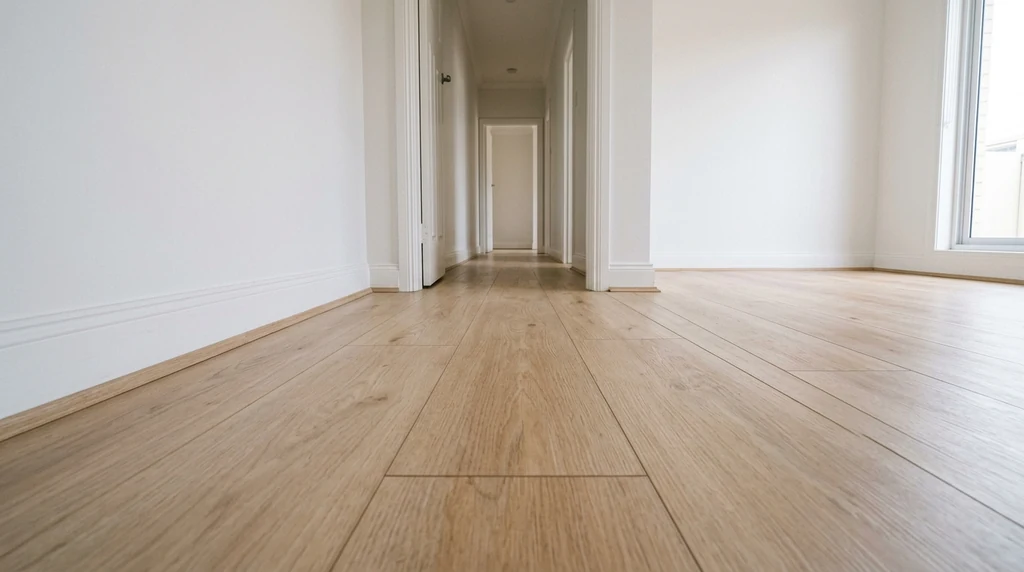
Cost Per Year Is the Only Number That Matters to a Landlord
Owner-occupiers buy a floor once and live with it. Landlords buy the same floor several times over a holding period, so the useful figure isn’t the price per square metre. It’s the price divided by how long it lasts.
| Product | Installed | Lifespan | Cost/m²/year |
|---|---|---|---|
| Budget synthetic carpet | $40–70 | 5–10 yrs | $4–14 |
| Solution-dyed nylon | $35–70 | 12–15 yrs | $2.33–5.83 |
| Wool | $90–150 | 15–25 yrs | $3.60–10 |
| Laminate | $60–80 | 15–25 yrs | $2.40–5.30 |
| Hybrid | $65–85 | 15–25 yrs | $2.60–5.70 |
| Engineered (re-sanded once) | $140–180 | 30–40 yrs | $3.50–6.00 |
Method: low price ÷ longest lifespan gives the low end; high price ÷ shortest lifespan gives the high end. Lifespans are estimates, so read these as comparative bands rather than precise figures.
Read the table honestly and budget synthetic carpet is frequently the most expensive floor in the property, because you buy it twice in the time a laminate is bought once, and each of those purchases comes with a vacant week. The three that survive the test are laminate, hybrid and solution-dyed nylon, and they finish within about fifty cents a square metre a year of each other. Nothing in the price list picks between them; what picks between them is the room, the traffic and how the floor handles water.
Where the Tax Treatment Changes the Maths
This is the part most flooring articles skip, and it is the part that actually moves an investor’s numbers.
The ATO treats removable floor coverings as depreciating assets with a published effective life. Carpet sits at 8 years. Floating timber flooring sits at 15 years. Floors that are fixed to the structure (tiles, direct-stick hardwood) are generally treated as capital works instead, deducted at 2.5% a year over 40 years.
Two consequences worth knowing before you choose:
- A floating installation is treated differently from a glued one. Two floors that look identical in a photo can sit in different parts of the tax schedule depending on how they were laid, which is worth raising with your accountant before the install, not at tax time.
- New assets are deductible, inherited ones usually aren’t. Since 7:30pm AEST on 9 May 2017, most individual investors can’t claim the decline in value of second-hand depreciating assets that came with the property. Buy and install a new carpet or a new floating floor yourself and the decline in value is claimable; the tired carpet you inherited at settlement generally isn’t.
We’re flooring people, not accountants. This is how the categories work, not advice about your return. Where the difference is material, a quantity surveyor’s depreciation schedule will cost less than the difference it finds, and your accountant should confirm how any specific floor is classified.
What to Put Where
The best-performing rental specification is rarely one product through the whole property.
| Area | Specify | Why |
|---|---|---|
| Living, dining, hallway, kitchen | Hybrid or laminate | Where damage happens and where photos are taken. Hard floors here also mean a tenant’s spill isn’t a bond dispute |
| Bedrooms | Carpet, or the same hard floor | Carpet lets and photographs warmer. A hard floor through the whole property is simpler to spot-repair between tenancies |
| Wet areas | Leave the existing tiles | Removing sound tiles is $40–80/m² of demolition for no return |
| Stairs | Carpet on high-density underlay | Stair nosings take concentrated impact; this is not where to save |
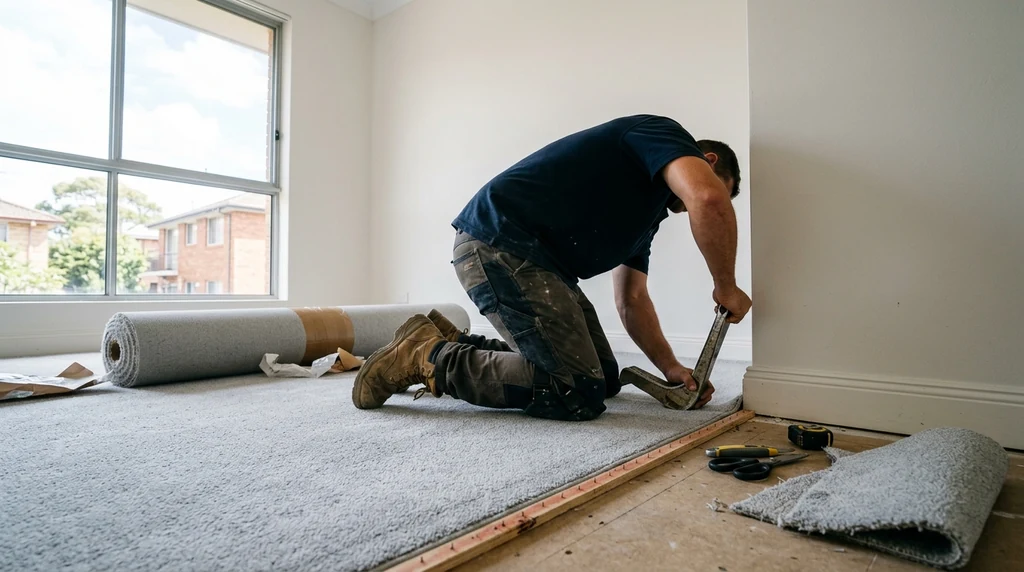
If you’re carpeting bedrooms, solution-dyed nylon at $35–70/m² is usually the better buy. It sits in the same band as budget synthetic at $40–70 and lasts 12–15 years against 5–10. That is not the trade-off people expect, so check it on the day: if the budget synthetic in front of you genuinely prices below the nylon beside it, take it. On these bands it rarely does. Our complete carpet buying guide works through the fibre tiers properly, and the synthetic carpet range covers both ends of that band.
The Specification Lines Worth Paying For
Two floors at the same price per square metre can be built very differently, and in a rental the difference shows up in year four rather than year one.
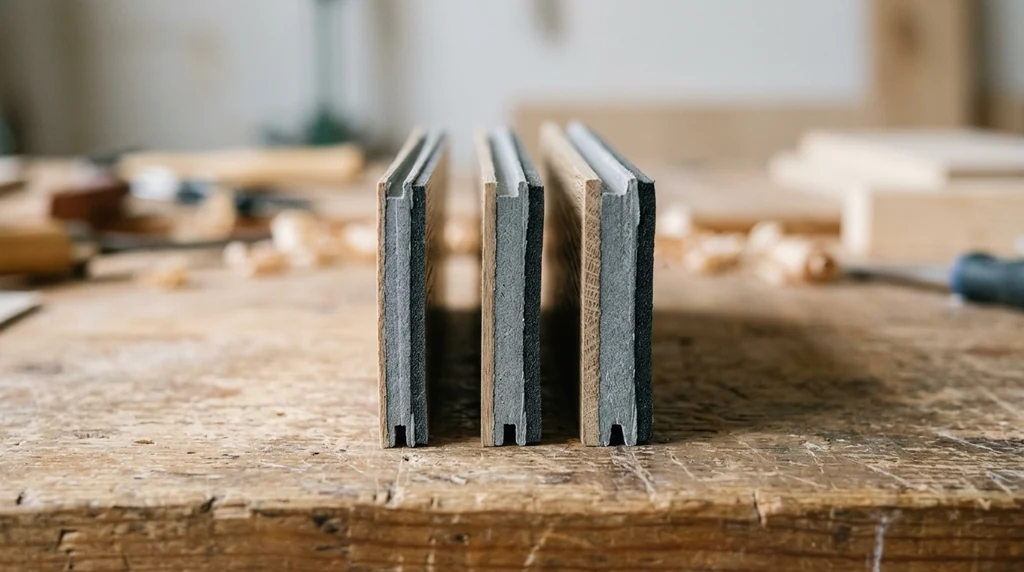
- Laminate: insist on AC4, not AC3. The AC rating predicts lifespan better than thickness does. An 8 mm AC4 board in a bedroom will outlast a 12 mm AC3 board in a hallway. AC4 is heavy residential and it’s what a tenanted hallway needs. The laminate cost guide sets out what each tier actually buys.
- Hybrid: check the wear layer, not the plank thickness. Budget SPC boards typically run a 0.3 mm wear layer: fine for a spare bedroom, undersized for a tenanted hallway. Our Easi-Plank sits at 0.5 mm and Aspire at 0.7 mm. The hybrid cost guide covers the tiers, and the hybrid range shows what each one looks like.
- Water resistance earns its keep in a rental. Hybrid brings a waterproof core, subject to product and warranty conditions, and in a property where you don’t see the leak for three weeks, that is worth the roughly $5/m² it sits above laminate at the mid tier.
What a Whole Property Costs
| Property | Laminate @ $60–80/m² | Hybrid @ $65–85/m² |
|---|---|---|
| Two-bedroom apartment (~70 m²) | $4,200–5,600 | $4,550–5,950 |
| Three-bedroom house (~100 m²) | $6,000–8,000 | $6,500–8,500 |
Supplied and installed including standard underlay and trims. Removing the old floor is extra: $15–35/m² for carpet or laminate, $40–80/m² for tiles or glued vinyl.
Two levers move those numbers in your favour. Jobs over about 80 m² attract a better per-metre rate, so doing the whole property at once beats doing it room by room across three tenancies. And a floating floor can often go straight over sound, level tiles, which removes the demolition line entirely. The complete flooring and carpet cost guide has the full list of what else can appear on a quote.
Time the Job to the Vacancy, Not the Tax Year
An empty week in Sydney costs most landlords more than the gap between a good floor and a cheap one. Floors go in fastest into an empty property, so the window between tenancies is the cheap time to do it, and a floating floor over existing tiles avoids the demolition days that turn a two-day job into a week.
One honest limit: if you’re selling inside two years, a full re-floor rarely returns what it costs. Doing the one room that photographs badly usually does.
Frequently Asked Questions
What is the best flooring for a rental property?
Hybrid or laminate through the living areas at $60–85/m² supplied and installed, with carpet in the bedrooms if you want the property to let warm. The hard floors last 15–25 years against 12–15 for solution-dyed nylon, so on cost per year they finish level; the hard floor earns its place on spills, stains and spot-repair between tenancies rather than on price. Budget synthetic at 5–10 years is the one to avoid.
Is carpet or hard flooring better in a rental?
Hard flooring in the traffic areas, almost always. It survives tenants better, cleans between tenancies rather than needing replacement, and takes stains out of the bond conversation. Carpet still earns its place in bedrooms, where it lets better and where wear is lower.
Can I claim new flooring on tax?
Replacing a floor you already own is usually a capital item rather than a repair, and how it’s deducted depends on the product and how it’s fixed: removable coverings depreciate over an effective life the ATO publishes (carpet 8 years, floating timber 15), while floors fixed to the structure are generally capital works at 2.5% a year. Your accountant should confirm the treatment for your property. We can tell you exactly how the floor will be installed, which is the input they need.
How long should carpet last in a rental?
Budget synthetic realistically gives 5–10 years, and closer to the bottom of that band under back-to-back tenancies. Solution-dyed nylon at $35–70/m² gives 12–15 and holds its appearance far longer, which makes it worth it on a property you plan to hold.
Is vinyl a good option for a rental?
We supply vinyl planks as a commercial product rather than a residential one, so for houses and apartments we’d point you at hybrid instead: same water resistance, better wear layer options, and a rigid core that handles an uneven slab. If you’re specifying for a commercial tenancy, our commercial flooring page is the right starting point.
Should I replace the floor between tenants or wait?
Between tenants, if it’s due. An occupied property adds furniture moving, access limits and a job that runs longer. If the floor has two good years left, wait and spend the money on the vacancy you’re actually trying to shorten.
Get a Number for Your Property
Ranges get you budgeting; a measure gets you a quote you can put in a spreadsheet. Book a free measure and quote and we’ll check the subfloor, tell you whether the existing tiles can stay, and itemise the removal and prep so nothing appears after the tenant has moved in. Our own installers, not subcontractors, with a 1-year installation warranty on every job.
Or bring your floor plan into the showroom: Belrose Shopping Centre, Shop 1.10 (02 9486 3502) or Hills Super Centre, Shop 85B, 16 Victoria Ave, Castle Hill (02 8606 4840).
For the wider comparison across every product and situation, start with our complete guide to choosing flooring for Sydney homes.