
The best carpet for bedrooms in most Sydney homes is solution-dyed nylon in a soft cut pile, on the best underlay you can justify: about $420–840 for a standard 12 m² room, supplied and installed. Wool is the upgrade at $1,080–1,800 for the same room, and it’s a better upgrade in a bedroom than almost anywhere else in the house.
But the more useful thing to know is why bedrooms are different, because it changes what you should be buying. A bedroom is the one room where the usual durability advice is wrong.
The Short Answer
| If this is you | Buy | 12 m² room, installed |
|---|---|---|
| Main bedroom, staying put, want it to feel good | Wool, cut pile | $1,080–1,800 |
| Most households, most bedrooms | Solution-dyed nylon, soft cut pile | $420–840 |
| Kids’ rooms, or anywhere that gets spilled on | Solution-dyed nylon, mid-tone flecked | $420–840 |
| Rental bedrooms | Solution-dyed nylon | $420–840 |
Two things stand out in that table. Wool costs roughly double. And budget synthetic isn’t on it: it starts at $40/m² against nylon’s $35 and lasts about half as long, so in a bedroom (rentals included) there is almost no reason to choose it over nylon.
A Bedroom Is the Easiest Room in the House to Carpet
Hallways, stairs and living rooms take a beating. A bedroom doesn’t: two people walking a short path between the door, the bed and the wardrobe, in socks, a handful of times a day.
That matters because nearly all carpet advice is written for the hard rooms. It says prioritise durability, choose a tight low pile, treat softness as a luxury you trade away. In a bedroom that advice is backwards. Durability is the one thing the room doesn’t demand much of, which means a bedroom is where you can buy comfort without paying for it in service life.
So: deeper pile than you’d put in a hallway, softer fibre than you’d put in a lounge, and no guilt about it. Our complete carpet buying guide for Sydney homes covers the rooms that do need armour, and the full wall-to-wall carpet range is here.
The Wear Comes From the Bed, Not Your Feet
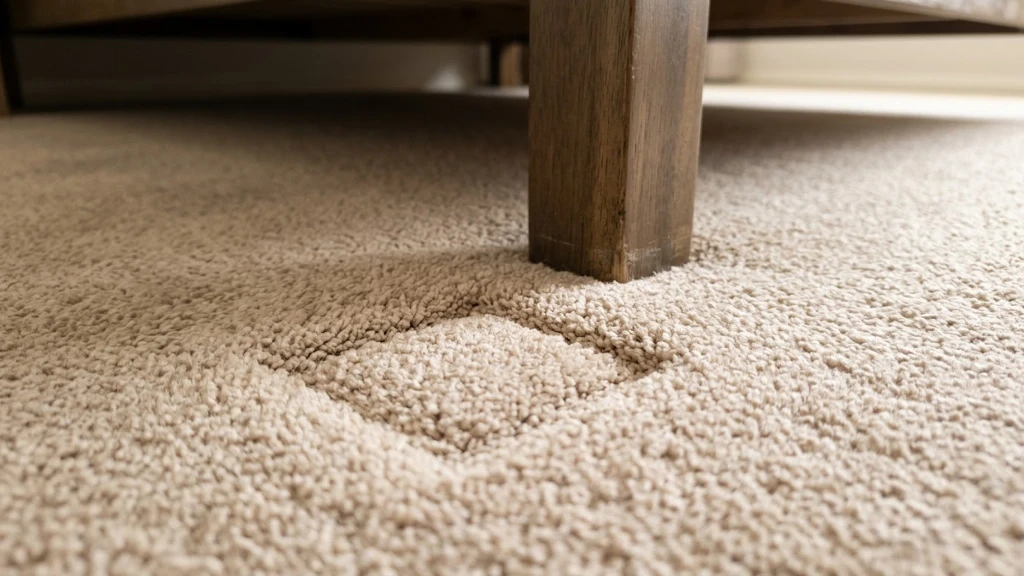
Here’s the part that changes the decision. Put a queen bed, two bedside tables and a wardrobe into a 12 m² bedroom and you’ve covered about 4.5 m² (close to 40% of the floor) with furniture that will not move for years.
You walk on maybe a third of that room. The damage that actually shows up in a bedroom isn’t abrasion from foot traffic. It’s compression: permanent flat spots where the bed legs and the wardrobe have stood, and the crushed strip along the path between door and bed.
Which means the specification that matters in a bedroom isn’t a wear rating. It’s crush recovery: whether the pile springs back. That’s where the fibres really differ:
- Wool has a natural crimp in the fibre. Woolmark describes it as a coiled spring that returns to shape after being bent, and it’s the reason a wool carpet recovers from furniture legs in a way synthetics approximate rather than match.
- Solution-dyed nylon recovers well: the best of the synthetics, and good enough that most people never notice the difference in a low-traffic room.
- Polyester and polypropylene flatten and stay flat. In a hallway that shows up in two years. Under a bed it shows up whenever you move the bed.
If you’re deciding between fibres on more than the bedroom, a full wool-versus-synthetic comparison is coming soon on this blog.
Spend the Money on Underlay
This is the recommendation most showrooms won’t lead with, because underlay isn’t what you came in to look at.
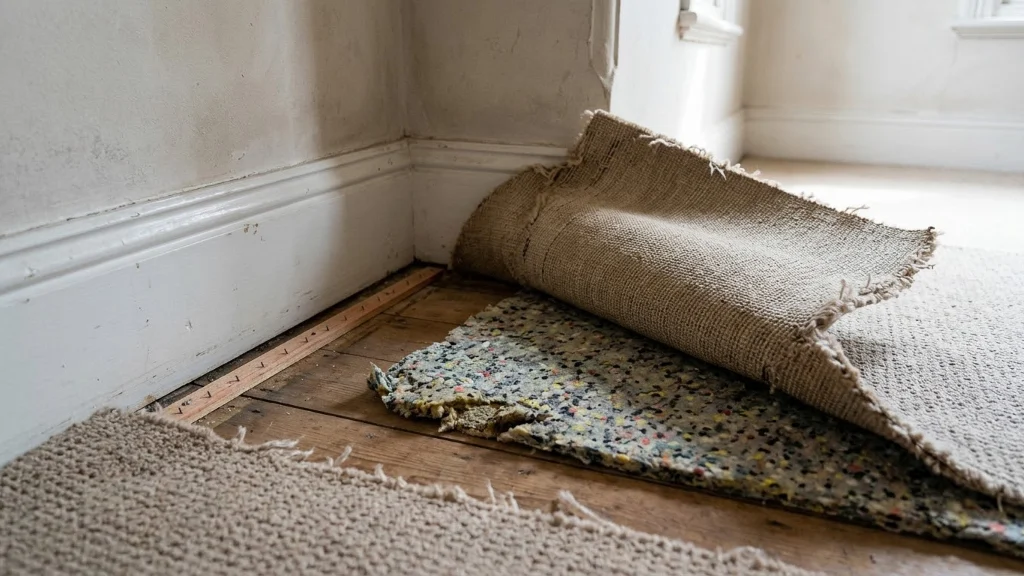
Underlay runs $8–25/m², so on a 12 m² bedroom that’s $96 to $300 for the whole room. It’s also what your feet are actually responding to when a carpet feels good underfoot: the pile you can see does less of that work than the layer you can’t.
Cheap underlay under good carpet is the most common mistake in this category. It feels like walking on concrete, and it shortens the carpet’s life because the pile takes the impact the underlay should have absorbed. In a bedroom, where you’re barefoot and the carpet isn’t being punished, paying less for the carpet and more for the underlay is usually the better trade.
One thing not to over-buy: the high-density rubber underlay at $15–20/m² exists for stairs and hallways, where it earns its keep. A bedroom doesn’t need it.
The Question Nobody Asks About a Bedroom Carpet
You spend about a third of your life in this room with the door shut and, in a Sydney winter, the window shut too. It is the one room in the house where what the floor gives off is worth a question.
New carpet, underlay and the adhesives used to fit them all release volatile organic compounds, most heavily in the first weeks. The Carpet Institute of Australia runs an Environmental Certification Scheme with a Low VOC certification, tested against a total VOC limit of 500 µg/m²/h and a formaldehyde limit of 10 µg/m²/h.
The useful detail: carpet is only one of three layers going down, alongside the underlay and any adhesive. So the question to ask is not just “is this carpet low-VOC” but what the underlay and adhesive are rated to as well. And whatever you buy, air the room out properly for the first fortnight: open windows, run the fan, don’t move a toddler in the same afternoon it’s laid.
Wool has an advantage here that isn’t marketing: Woolmark publishes research that wool absorbs formaldehyde and other pollutants from indoor air and doesn’t release them again. Woolmark is the wool industry body, so weigh it accordingly. But in a bedroom it’s a point worth knowing.
What a Bedroom Actually Costs
Supplied and installed in Sydney, including standard underlay and trims. Removing the old carpet is extra, at $15–35/m².
| Fibre | Rate | One bedroom (12 m²) | Three bedrooms (36 m²) | Lifespan |
|---|---|---|---|---|
| Solution-dyed nylon | $35–70/m² | $420–840 | $1,260–2,520 | 12–15 years |
| Budget synthetic | $40–70/m² | $480–840 | $1,440–2,520 | 5–10 years |
| Wool | $90–150/m² | $1,080–1,800 | $3,240–5,400 | 15–25 years |
One quirk worth knowing before you compare quotes: carpet comes off a 3.66 m wide roll, so more carpet is cut than the floor shows. A 4.0 × 3.0 m bedroom is 12 m² of floor but needs a 4.0 m length off that roll, about 14.6 m² of carpet. The installed rates above are per square metre of floor, with that extra carpet allowed for in the rate; it’s one reason a single small bedroom prices above the per-metre rate while a whole-house job prices below it. Full pricing sits in our Sydney flooring and carpet cost guide.
Colour and Pile in a Room With the Blinds Half Shut
Bedrooms are the darkest rooms in most houses and the only ones routinely judged in low light. Two things follow.
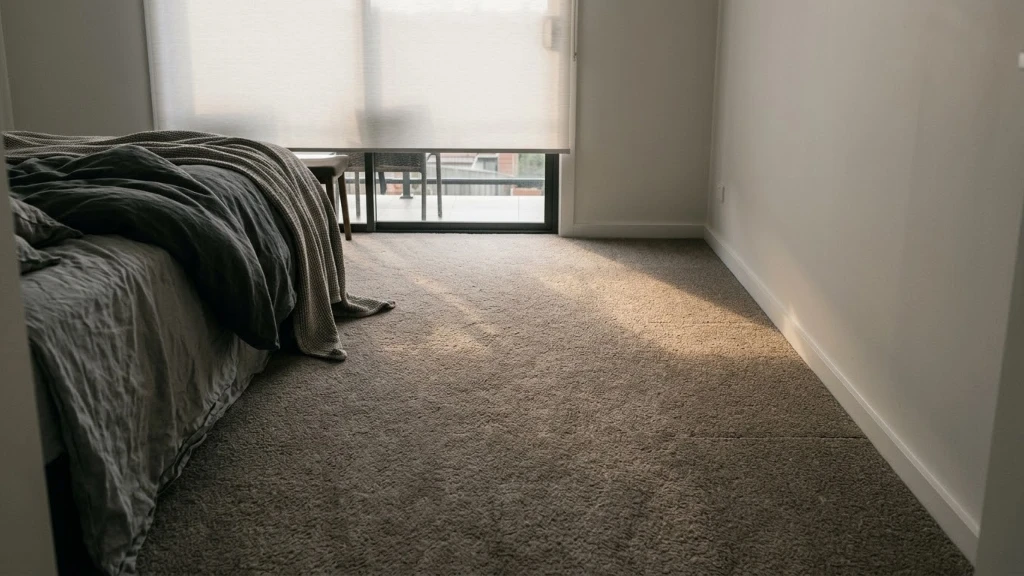
Go a shade lighter than you think. A colour chosen under showroom downlights reads noticeably darker with the curtains drawn, and bedrooms are small enough that a heavy floor closes them in. And keep two to three shades of contrast between floor and walls. Matching them too closely flattens a room rather than unifying it, and it’s the regret we hear most.
On pile: a cut pile is the bedroom default: softer underfoot and quieter than a loop. Loop pile is more hard-wearing, which the room doesn’t need, and if you have a cat, claws pull loops. A mid-tone with a slight fleck hides lint and dust between vacuums far better than a flat dark solid, which shows everything.
Frequently Asked Questions
Which carpet is best for bedrooms?
Solution-dyed nylon in a soft cut pile suits most bedrooms: durable enough for a room that isn’t punished, easy to clean, and $420–840 for a standard 12 m² room installed. Wool is the genuine upgrade at $1,080–1,800, and a bedroom is the best place in the house to spend it because you’re barefoot and the floor isn’t taking a beating.
Is wool worth it in a bedroom?
More than in any other room. Wool costs roughly double, and the two things it does best (feel underfoot and springing back from furniture) are exactly what a bedroom asks for. If the budget only stretches to wool in one room, make it the main bedroom. You can see the range on our wool carpet page.
What pile height is best for a bedroom?
Deeper than you’d use elsewhere. Bedrooms see light traffic, so the usual trade-off between comfort and durability barely applies. A soft cut pile is the standard answer; save tight low-pile constructions for hallways and stairs.
How much underlay do I need for a bedroom?
Good underlay costs $8–25/m², so $96–300 for a typical 12 m² bedroom, a small share of the job and the part you’ll feel most. Skip the high-density rubber at $15–20/m²; that’s built for stairs and hallways, not bedrooms.
What colour carpet is best for a bedroom?
A mid-tone with a slight fleck, two to three shades away from the wall colour. Bedrooms are darker than showrooms, so anything you choose will read deeper once it’s laid, and a flat dark solid shows every piece of lint.
Is new carpet safe to sleep on straight away?
New carpet, underlay and adhesives release VOCs, most heavily in the first weeks. Air the room out thoroughly for a fortnight and give it a night or two before anyone sleeps in there. Ask whether the carpet carries the Carpet Institute of Australia’s Low VOC certification, and what emissions rating the underlay and any adhesive have.
How long should a bedroom carpet last?
Longer than the same carpet elsewhere, because the room is kind to it. Solution-dyed nylon is rated 12–15 years and a bedroom will sit at the top of that; wool 15–25; budget synthetic 5–10 even in easy conditions. What usually ends a bedroom carpet isn’t wear. It’s a change of taste or a renovation.
Feel It Before You Choose It
Carpet is the one floor you choose with your feet, and the bedroom is where you notice it most. Take your shoes off in the showroom. The difference between a good nylon and a wool is obvious in about three steps, and so is the difference good underlay makes.
Book a free measure and quote and we’ll bring samples to the actual room, in the actual light, with the blinds where you keep them. Or come to Belrose (Belrose Shopping Centre, Shop 1.10, 02 9486 3502) or Castle Hill (Hills Super Centre, Shop 85B, 16 Victoria Ave South Building, 02 8606 4840). Our own installers do the work, and every installation carries a one-year warranty.