
Wool runs $60–250/m² supplied and installed in Sydney, with most jobs landing at $90–150. Solution-dyed nylon runs $35–70/m². That’s the whole wool vs synthetic carpet argument in two lines, and on those numbers the case for wool is not that it saves you money over time. It doesn’t. The case for wool is how it feels, how it behaves in a fire, and what it does to the air in the room.
Whether that’s worth $55–80 more per square metre is a real question with two defensible answers. Here’s what sits behind each one.
The Short Answer
| Wool | Solution-dyed nylon | |
|---|---|---|
| Installed, Sydney | $60–250/m² · most jobs $90–150 | $35–70/m² |
| Realistic lifespan | 15–25 years | 12–15 years |
| Feel underfoot | The benchmark. Nothing synthetic matches it | Good, and improving. Not the same |
| Stain behaviour | Resists at first, then holds acidic spills: wine, coffee, urine | Colour is locked in the fibre, so it survives aggressive cleaning |
| Cleaning | Wool-safe products only. No bleach, no strong alkalis | Forgiving. Handles the cleaners that would ruin wool |
| Fire behaviour | Naturally hard to ignite and doesn’t melt | Melts and drips |
| Weak point | Moths and carpet beetles; fading in direct sun | Feel, and it’s a petroleum product |
Our complete carpet buying guide for Sydney homes covers pile, underlay and how to read a quote; this guide is only about choosing between the two fibres.
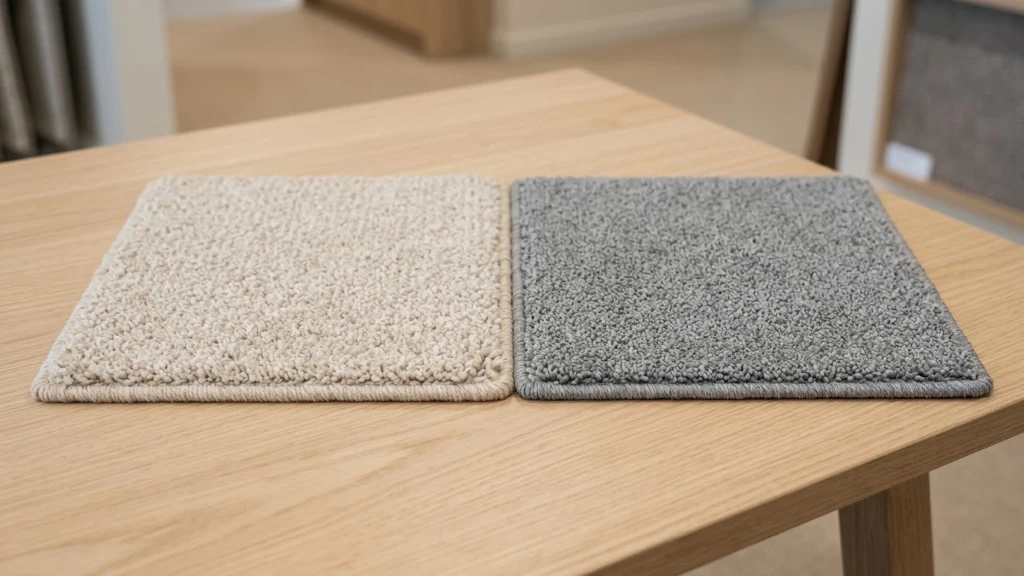
The Price Gap Is Bigger Than It Looks
On a 100 m² three-bedroom home, carpeted throughout:
| Fibre | Installed rate | 100 m² whole home |
|---|---|---|
| Solution-dyed nylon | $35–70/m² | $3,500–7,000 |
| Wool | $90–150/m² (most jobs) | $9,000–15,000 |
That’s $5,500 to $8,000 of difference on one house. It is not a rounding error, and it’s the number that should decide whether you read the rest of this page or stop here and order nylon.
The usual answer to a gap that size is “but wool lasts longer, so it’s cheaper per year.” Run the published numbers and it isn’t:
| Fibre | Installed price | Lifespan | ≈ Cost per m² per year |
|---|---|---|---|
| Budget synthetic (polyester, polypropylene) | $40–70/m² | 5–10 years | $4–14 |
| Solution-dyed nylon | $35–70/m² | 12–15 years | $2.33–5.83 |
| Wool | $90–150/m² | 15–25 years | $3.60–10 |
Low price divided by longest lifespan gives the low end; high price divided by shortest lifespan gives the high end. Lifespans are estimates, so read these as comparative bands rather than precise figures.
Wool is more expensive per year than solution-dyed nylon at both ends of the range. The extra ten years don’t close a gap that starts at more than double the price. So if you’re choosing wool, choose it for what it is, not as an investment that pays itself back, because on these numbers it doesn’t.
The fibre that does badly on this table is budget polyester, and note that it isn’t the cheapest to buy either. It starts at $40/m² against nylon’s $35, and it lasts half as long, so it finishes as the most expensive carpet in the house per year. Full pricing across every floor type sits in our Sydney flooring and carpet cost guide.
What Wool Actually Gives You
Three things, and they’re real.
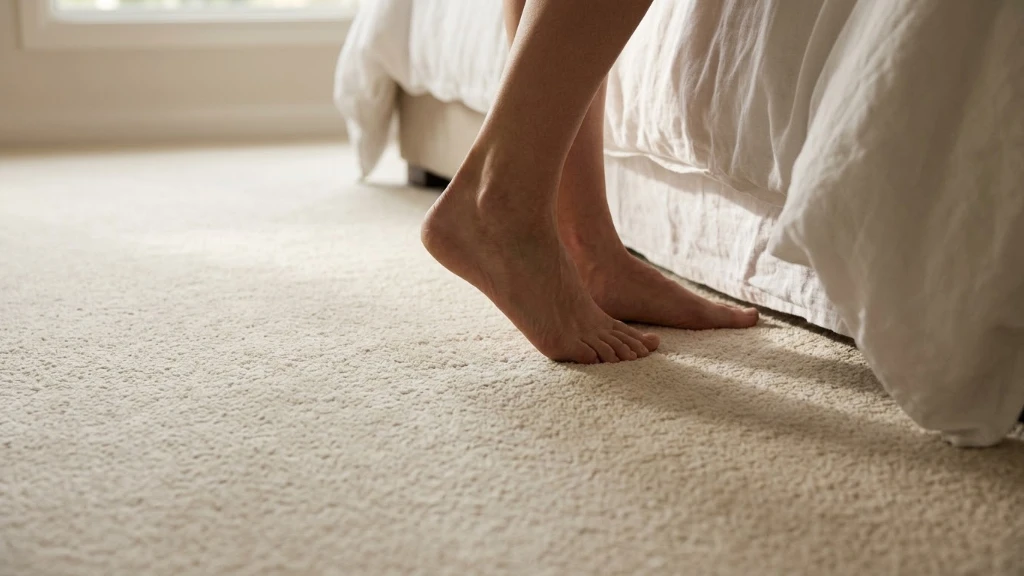
The feel. Wool fibre has a natural crimp. Woolmark describes each fibre as a coiled spring that returns to its shape after being bent. That’s why a wool carpet recovers from furniture legs and footfall in a way synthetics approximate rather than match. Walk on both in a showroom and most people can tell within three steps. This is the reason people buy wool, and it’s a perfectly good one.
Fire behaviour. This is the property nobody mentions and it’s the most serious one. Woolmark cites an ignition temperature of 570–600°C for wool, against 485–575°C for nylon and 485–560°C for polyester. The bigger difference is melting: nylon melts at 160–260°C and polyester at 252–292°C, while wool doesn’t melt at all. A synthetic carpet in a house fire melts and drips; wool chars and tends to self-extinguish. In a bedroom or a hallway that forms part of an escape route, that difference is worth thinking about even though no Australian residential standard requires you to.
Air and humidity. Woolmark publishes research that wool absorbs formaldehyde, sulfur dioxide and nitrogen oxides from indoor air and doesn’t release them again, even when heated. Wool also takes up and gives back moisture vapour, which takes the edge off humidity swings, which is useful in Belrose and the Northern Beaches. Woolmark is the industry body for Australian wool, so read those claims as coming from an interested party; but the fibre chemistry underneath them is not controversial.
Wool also builds up much less static than synthetics, so it attracts less dust, and it biodegrades at the end of its life instead of sitting in landfill. You can see the range on our wool carpet page.
What Wool Asks in Return
Every one of these is manageable. None of them is nothing.
- Moths and carpet beetles. Wool is a protein fibre and insects eat it. Most modern wool carpet is treated, but the risk never drops to zero. Under furniture that never moves is where it shows up.
- Cleaning chemistry. Wool-safe products only. Bleach and strongly alkaline cleaners damage the fibre, which rules out a lot of supermarket spot cleaners and means professional cleaning costs more than it does for synthetics.
- Acidic spills. Wool’s natural coating shrugs off water for the first few minutes, which lulls people. Red wine, coffee and pet urine are acidic and wool holds them if they’re not lifted quickly.
- Direct sun. North-facing rooms with big glass will fade or yellow a wool carpet unevenly over years. Solution-dyed nylon is the better answer in a sun trap.
- It sheds at first. New wool carpet releases loose fibre for the first few months. It’s normal, it stops, and it surprises people who weren’t told.
What Synthetic Gives You
“Synthetic” covers three fibres that behave very differently, and lumping them together is how people end up disappointed.
Solution-dyed nylon is the one worth comparing to wool. The pigment is mixed into the polymer before the fibre is formed rather than applied to the outside, so the colour goes all the way through. That’s why it survives sunlight and why you can clean it with things that would destroy a wool carpet. It’s the toughest common carpet fibre, it recovers well from compression, and at $35–70/m² it sits in the same price band as budget polyester while lasting about twice as long.
Polyester and polypropylene are softer to the hand in the showroom and flatten faster in the hallway. They suit spare rooms and holiday places where the floor needs to be presentable rather than permanent. Even in a rental, solution-dyed nylon in the same price band is the better buy. A comparison of nylon against polyester and triexta is coming soon on this blog.
The honest limitation of all of them: they’re petroleum products, they melt rather than char, and no synthetic yet made feels like wool underfoot. The full range is on our synthetic carpet page.
Where Each One Wins
| Room | Our pick | Why |
|---|---|---|
| Main bedroom | Wool | Barefoot every morning, low traffic, few spills. If wool goes anywhere, it goes here |
| Kids’ bedrooms | Solution-dyed nylon | Whatever gets spilled, you can clean it properly |
| Formal lounge | Wool | Used occasionally, seen constantly, and the feel is the point |
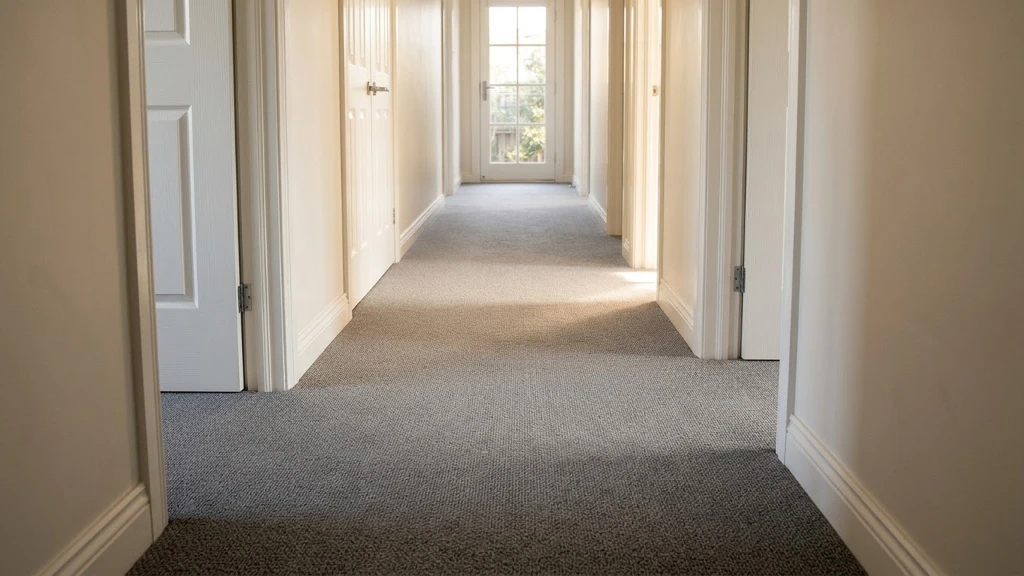
| Hallways and stairs | Solution-dyed nylon on high-density rubber underlay | These wear out first in every house. Buy durability, not feel |
| North-facing room with big windows | Solution-dyed nylon | Wool fades unevenly in direct sun; solution-dyed doesn’t |
| Rental or investment property | Solution-dyed nylon | Durable mid-grade beats premium in a property you don’t live in |
Mixing is normal and nobody will notice the join if the rooms are separated by doorways. Wool in the main bedroom and nylon everywhere else is a very common Sydney answer, and it costs a fraction of wool throughout.
Three Questions That Actually Decide It
- Who walks on it, and with what? Adults in socks is a wool answer. Kids, dogs and a hallway is a nylon answer. Be honest about the next ten years, not the current ones.
- How much direct sun does the room get? If you can’t put a lounge suite there without worrying about fading, don’t put wool there either.
- Does the difference between $3,500 and $15,000 change what else you can do to the house? If it does, the decision is already made and there’s no shame in it. Solution-dyed nylon is a good floor, not a consolation prize.
Frequently Asked Questions
Is wool or synthetic carpet better?
Neither, in the abstract. Wool feels better, handles fire better and, on Woolmark’s research, absorbs some indoor pollutants; solution-dyed nylon costs less than half as much, takes harder cleaning and doesn’t fade in sun. On the published Sydney bands, nylon is also cheaper per year of service, so wool is a preference rather than an investment. Match the fibre to the room and the household.
Is wool carpet worth the extra money?
In a main bedroom or a formal lounge, often yes. You feel it every day and those rooms don’t get punished. Across a whole house it’s $5,500–8,000 more than nylon on 100 m², and that money buys comfort rather than extra service life.
Which is better with pets?
Solution-dyed nylon, clearly. Pet accidents are acidic and wool holds them, and the cleaners that deal with the smell properly are the ones that damage wool. If you want wool with a dog in the house, keep it to rooms the dog doesn’t sleep in.
Does wool carpet get moths?
It can. Wool is a protein fibre and moths and carpet beetles feed on it. Most modern wool carpet is insect-treated, which reduces the risk substantially without eliminating it. Vacuuming under and behind furniture (the still, dark places) is the practical defence.
What does “solution-dyed” actually mean?
The colour pigment is added to the liquid polymer before the fibre is extruded, so it runs all the way through rather than sitting on the surface. Conventionally dyed carpet has colour applied to the outside of a finished fibre, where sunlight and cleaning can strip it. It’s the single most useful word on a synthetic carpet spec.
Is wool carpet better for allergies?
It generates less static so it holds less airborne dust, and Woolmark’s research says it absorbs certain indoor pollutants. But wool is also an allergen for some people, and dust mites live in any carpet. If someone in the house has a diagnosed sensitivity, that’s a conversation for their doctor before it’s a flooring decision.
Can I put wool on stairs?
You can, and it will look beautiful and wear out first. Stairs concentrate traffic onto the nosings more than any other surface in the house. If you do it, insist on high-density rubber underlay at $15–20/m² and power-stretching. A quote that mentions power-stretching and AS/NZS installation standards is a quote from professionals.
Come and Walk on Both
This is a decision that survives about four minutes of reading and then needs your feet. Both fibres are on the floor in our showrooms, in the pile heights and colours we actually sell, and the difference is obvious the moment you take your shoes off.
Book a free measure and quote and we’ll bring samples to your own rooms under your own light, or visit us at Belrose (Belrose Shopping Centre, Shop 1.10, 02 9486 3502) or Castle Hill (Hills Super Centre, Shop 85B, 16 Victoria Ave South Building, 02 8606 4840). Our own installers do the work, and every installation carries a one-year warranty.