
Laminate flooring has quickly become one of the most in-demand flooring solutions in modern interior design, particularly across Australian homes where homeowners are constantly looking for a smart balance between style, durability, and cost-effectiveness. In today’s property market, flooring is no longer just a functional element it plays a major role in defining the overall atmosphere, value, and comfort of a space.
One of the main reasons laminate flooring stands out is its ability to realistically replicate the natural appearance of timber flooring, without the high cost, maintenance demands, or sensitivity of solid hardwood. This makes it an attractive option for homeowners who want a premium looking interior without stretching their renovation budget.
Unlike traditional hardwood floors, laminate flooring is manufactured using a multi-layer engineered structure. Each layer is carefully designed to contribute to strength, stability, and long-term performance. The result is a flooring solution that not only looks stylish but is also built to handle everyday lifestyle demands such as foot traffic, furniture movement, pets, and family activity.
In modern Australian homes, where open-plan layouts and multifunctional spaces are increasingly common, laminate flooring has become a practical design choice. It works seamlessly in living rooms, bedrooms, hallways, and dining areas, creating a continuous and cohesive look throughout the home. It is also commonly used in rental properties and investment homes due to its cost efficiency and low maintenance requirements, making it a smart long-term flooring solution.
Beyond practicality, laminate flooring also offers strong design flexibility. With a wide range of finishes, colours, and textures available, it can easily complement different interior styles from minimalist and Scandinavian-inspired spaces to more classic or contemporary home designs.
For many homeowners, laminate flooring represents a modern upgrade that delivers the visual appeal of natural wood while offering the everyday convenience that busy lifestyles demand.
What is Laminate Flooring Made Of?
Laminate flooring is a carefully engineered multi-layer flooring system designed to replicate the natural beauty of timber or stone while delivering enhanced durability, stability, and everyday practicality. Unlike solid wood flooring, which is made from a single natural material, laminate is constructed using several fused layers, each serving a specific purpose in strengthening performance and improving visual appeal.
This layered construction is one of the main reasons laminate flooring has become such a popular choice in modern Australian homes. It offers the look and feel of premium flooring materials, while still remaining more affordable, easier to maintain, and better suited to busy household lifestyles.
Wear Layer
At the surface, laminate flooring features a transparent wear layer that acts as a protective shield. This top layer is designed to resist scratches, stains, fading, and general wear from daily foot traffic. It plays a crucial role in maintaining the floor’s appearance over time, especially in high-use areas such as living rooms, hallways, and family spaces.
Design Layer
Below the wear layer is the decorative or design layer, which is where the visual character of the flooring comes to life. This layer contains a high-resolution printed image that realistically mimics natural wood grains, stone textures, or contemporary abstract finishes. Advances in printing technology have made modern laminate flooring highly realistic, often making it difficult to distinguish from real timber at first glance.
Core Layer
Supporting these upper layers is the core layer, typically made from high-density fiberboard (HDF). This is the structural foundation of the plank and is responsible for providing strength, impact resistance, and long-term stability. The quality of this core layer significantly influences how well the flooring performs under pressure, temperature changes, and everyday use.
Backing Layer
Finally, at the bottom, there is a backing layer that provides moisture resistance and structural balance. This layer helps prevent the plank from bending, swelling, or warping due to humidity or environmental changes, which is particularly important in regions where indoor climate conditions can vary.
When all these layers are combined, laminate flooring becomes a highly efficient flooring solution that balances appearance, durability, and affordability. It delivers a stylish, timber-like finish without the high cost and maintenance requirements of natural hardwood, making it a practical long-term investment for homeowners who want both design appeal and everyday functionality.
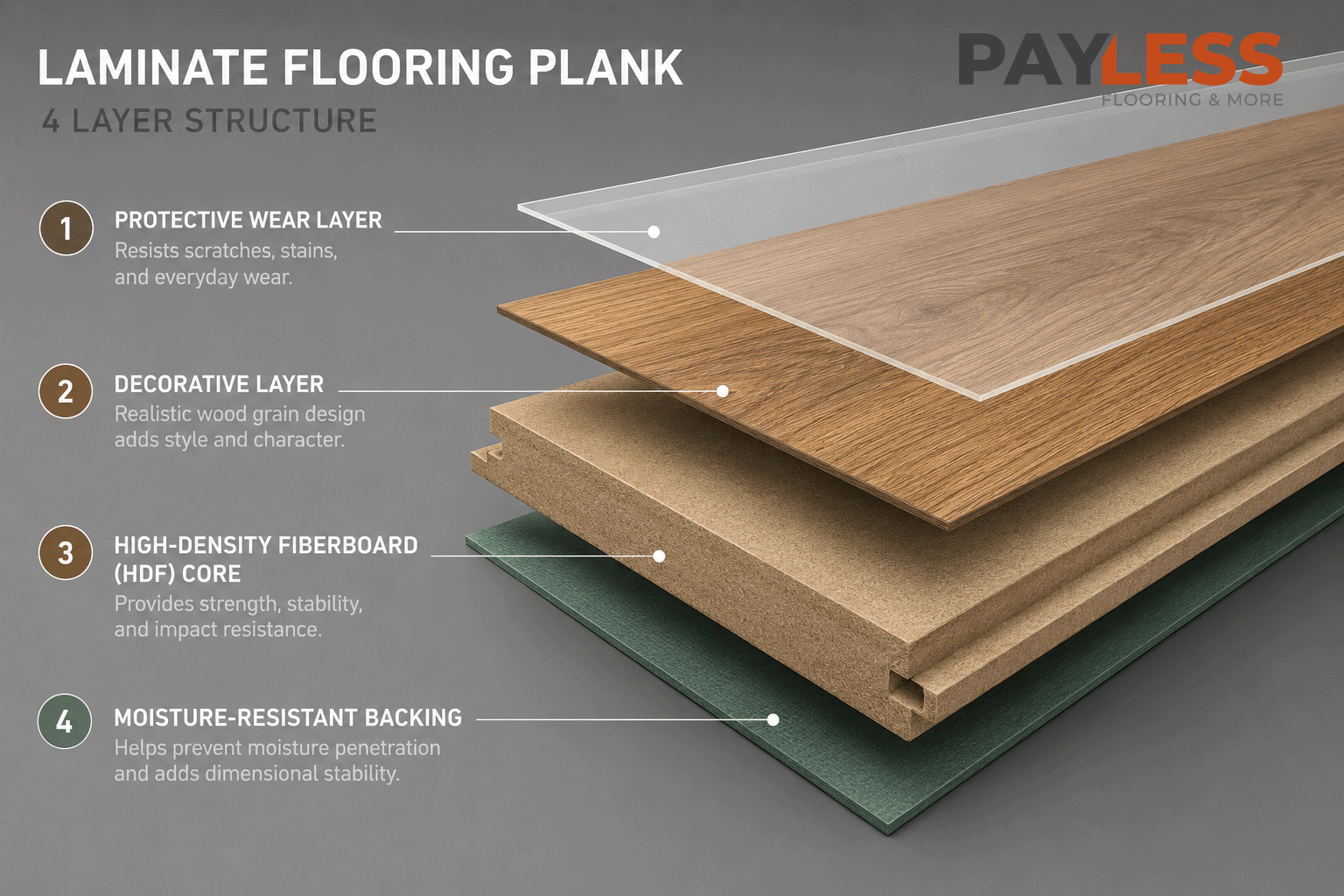
Layers of Laminate Flooring
| Layer | Purpose | Material |
|---|---|---|
| Wear Layer | Protects against scratches and stains | Clear protective coating |
| Design Layer | Provides visual appearance | Printed decorative film |
| Core Layer | Adds strength and stability | High-density fiberboard (HDF) |
| Backing Layer | Moisture resistance and balance | Resin-based backing |
TYPES OF LAMINATE FLOORING
Laminate flooring is available in a wide variety of types, each designed to suit different interior styles, lifestyle needs, and functional requirements. This flexibility is one of the main reasons it has become such a popular flooring choice in modern Australian homes, where homeowners often want a balance between aesthetics, practicality, and long term value.
When choosing laminate flooring, the differences usually come down to surface texture, visual finish, and installation method. These variations allow homeowners to tailor the flooring to match everything from minimalist contemporary spaces to more bold and modern interiors.
embossed laminate flooring
One of the most common types is embossed laminate flooring, which is designed to closely replicate the natural texture of real wood. The surface is lightly textured so that it follows the printed wood grain, creating a more realistic and tactile feel underfoot. This type is often preferred by homeowners who want the authentic appearance of timber without the higher cost or maintenance associated with real hardwood flooring.
high-gloss laminate flooring
Another popular option is high-gloss laminate flooring. This type features a smooth, reflective surface that adds a polished and elegant look to interior spaces. It is often used in modern and luxury-inspired designs where a clean, sleek finish is desired. High-gloss laminate can help brighten a room by reflecting natural and artificial light, making spaces feel more open and visually striking. However, it is typically better suited for low to moderate traffic areas, as the glossy surface may show marks more easily.
matte laminate flooring
On the other end of the spectrum, matte laminate flooring offers a more natural and understated appearance. With its low-shine finish, it closely resembles raw timber and blends seamlessly into relaxed interior styles. This type has become especially popular in Scandinavian, Japandi, and minimalist Australian homes where simplicity, warmth, and subtle texture are key design elements. Matte finishes are also practical, as they tend to hide dust and minor imperfections more effectively than glossy surfaces.
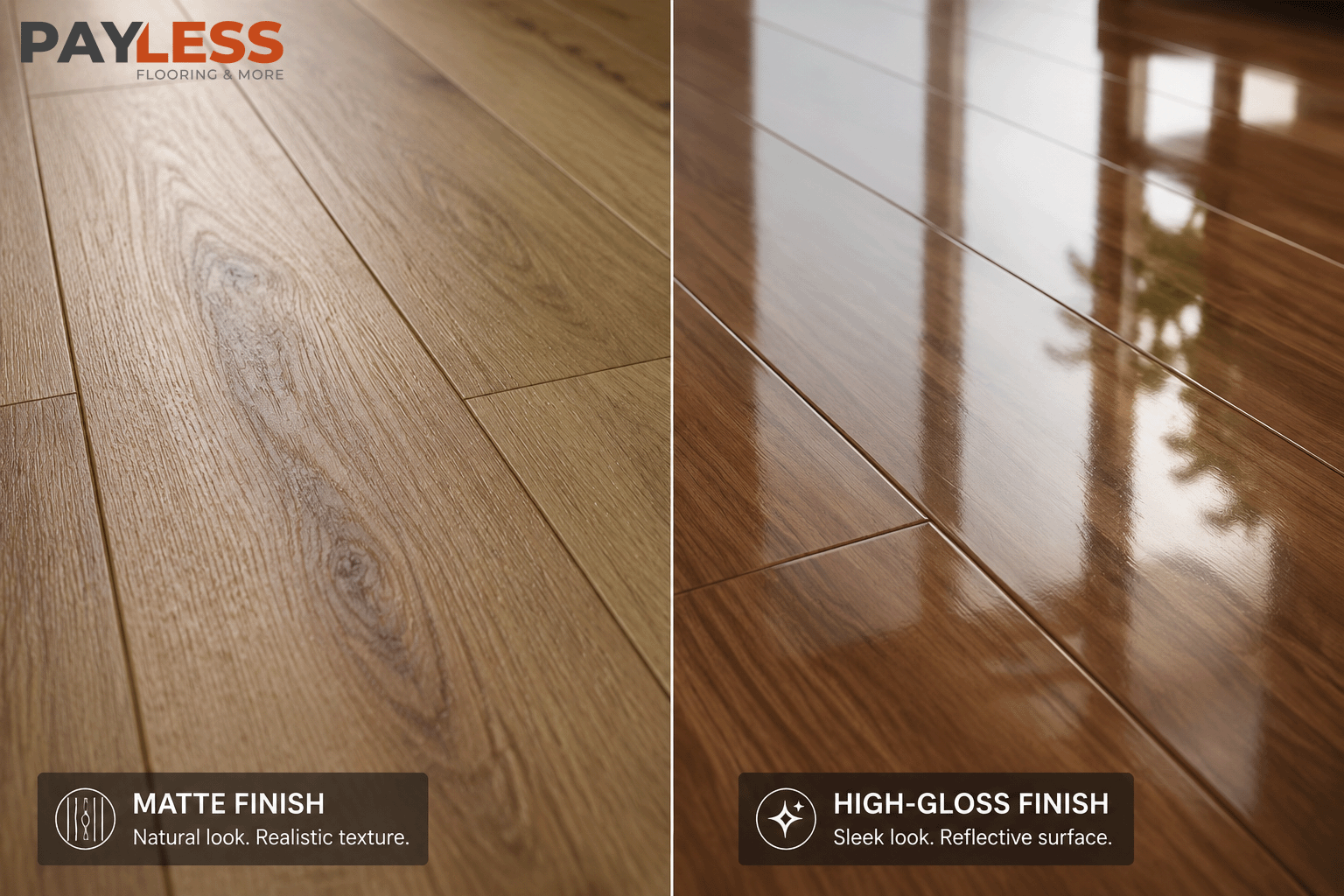
installation systems laminate flooring
Beyond surface finishes, laminate flooring is also differentiated by its installation systems.
click-lock installation
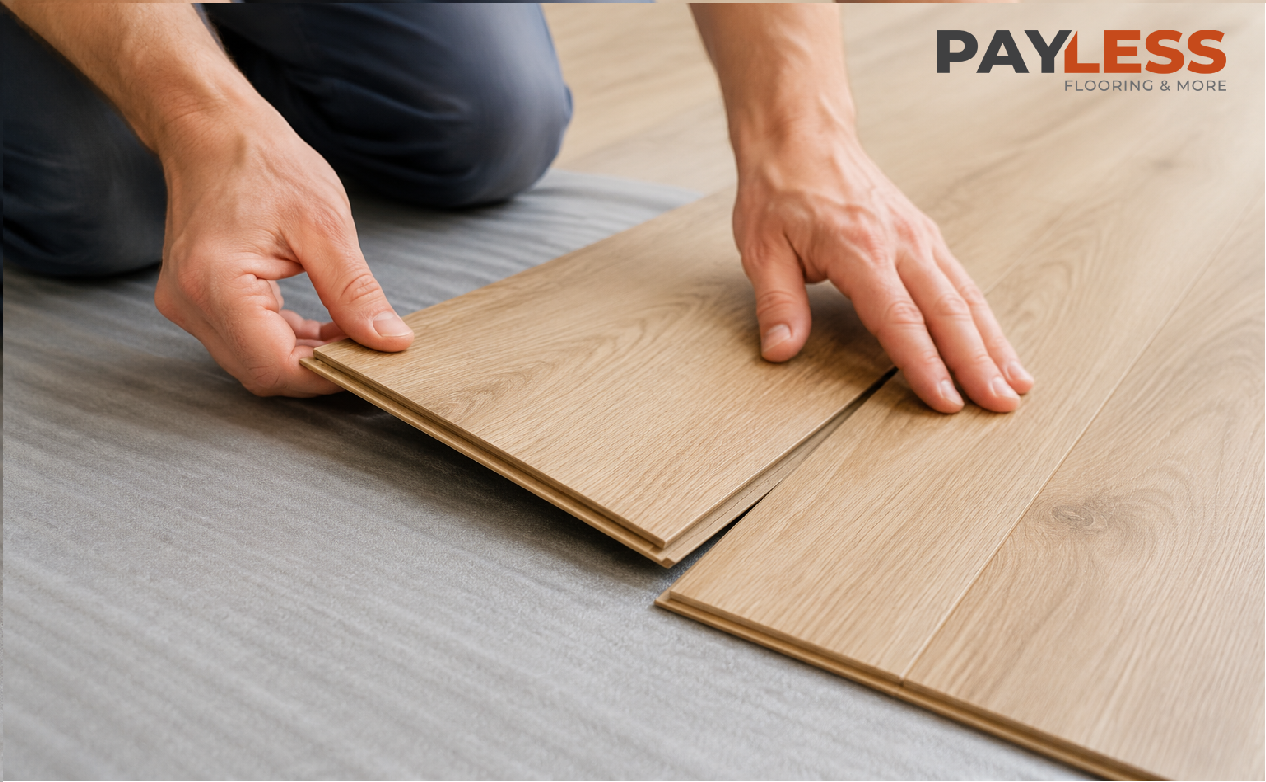
The most widely used option is click-lock installation, which allows planks to easily snap together without the need for glue or nails. This system is highly popular in residential settings because it is quick, efficient, and often suitable for DIY installation, which can help reduce overall renovation costs.
glue-down installation systems
There are also glue-down installation systems, which provide a more permanent and stable fit. This method is less common in typical home settings but may be used in commercial environments or areas where extra stability is required.
Overall, the wide range of laminate flooring types gives homeowners the flexibility to choose a style that not only complements their interior design but also aligns with their lifestyle needs, maintenance expectations, and budget considerations.
What is the Difference Between Laminate and Vinyl Flooring?
Laminate and vinyl flooring are often compared because they look similar at first glance, but they are made from different materials and perform differently in various environments.
Laminate flooring is primarily wood-based, using HDF as its core, while vinyl flooring is made from synthetic PVC material. This makes vinyl more water-resistant, while laminate tends to offer a more natural timber-like feel underfoot.
In terms of appearance, laminate often provides a more realistic wood texture, whereas vinyl offers greater flexibility in waterproof applications such as bathrooms and laundries.
Laminate vs Vinyl Flooring
| Feature | Laminate Flooring | Vinyl Flooring |
|---|---|---|
| Core Material | Wood-based (HDF) | Synthetic PVC |
| Water Resistance | Moderate | High |
| Appearance | Very realistic timber look | Versatile design options |
| Comfort | Firm underfoot | Softer underfoot |
| Best Use | Living rooms, bedrooms | Kitchens, bathrooms |
STRENGTHS OF LAMINATE FLOORING (PROS)
Laminate flooring is widely chosen in modern homes because it offers a practical balance of style, durability, and affordability. It delivers the look of natural timber without the high cost, making it a budget-friendly option for renovations and new builds.
Durability
One of its main advantages is durability. The protective wear layer helps resist scratches, stains, and daily wear, making it suitable for families, pets, and high-traffic areas.
simple Installation
Installation is also simple and efficient, especially with click-lock systems that allow quick fitting, often without professional help.
low maintenance
Another key benefit is low maintenance. Regular sweeping and occasional damp mopping are usually enough to keep it clean and looking fresh.
Overall, laminate flooring is a smart choice for homeowners who want a stylish, durable, and easy-care flooring solution without overspending.
Weaknesses of Laminate Flooring (Cons)
While laminate flooring offers many practical benefits, it also comes with a few limitations that are important to consider before making a final decision.
Not fully waterproof
One of the main drawbacks is that it is not fully waterproof. Although it can handle minor spills, prolonged exposure to moisture or standing water can cause the core layer to swell or become damaged. Because of this, it may not be the best option for areas like bathrooms or laundry rooms unless specifically designed as water-resistant laminate.
cannot be refinished
Another limitation is that laminate flooring cannot be refinished. Unlike solid timber, which can be sanded and restored, laminate has a fixed surface layer. Once it becomes significantly worn or damaged, the affected planks usually need to be replaced.
Sound
Sound is also something to keep in mind. Laminate flooring can sometimes feel louder underfoot compared to carpet or vinyl, especially in busy areas. However, this can often be improved by using a quality underlay during installation.
Overall, while laminate flooring is highly practical and cost-effective, understanding these limitations helps ensure it is used in the right areas of the home for the best long-term results.
THINGS TO LOOK OUT FOR WHEN BUYING LAMINATE FLOORING
When selecting laminate flooring, paying attention to a few key details can make a significant difference in long-term performance, durability, and overall satisfaction.
Thickness of laminate flooring
One of the first factors to consider is thickness. Thicker laminate boards generally provide better stability, improved durability, and a more solid feel underfoot. They can also help reduce noise, which is especially important in busy homes or multi-level living spaces.
Quality of the wear layer
The quality of the wear layer is another essential aspect. This protective top layer plays a major role in resisting scratches, stains, and everyday wear. A stronger wear layer ensures the flooring maintains its appearance for longer, even in high-traffic areas.
AC rating
AC rating (Abrasion Class) is also an important quality indicator. Higher AC ratings typically mean the flooring is more resistant to wear and better suited for heavy use environments such as living rooms, hallways, and family spaces.
Moisture resistance
Moisture resistance should also be carefully considered, particularly in Australian homes where humidity levels can vary across regions.
Choosing a laminate flooring option with improved moisture protection can help prevent long term issues such as swelling or surface damage.
Overall, taking these factors into account helps ensure you choose a laminate flooring option that not only looks good but also performs well over time in real everyday conditions.
Buying Guide Checklist
| Factor | What to Look For |
|---|---|
| Thickness | 8mm–12mm for residential use |
| AC Rating | AC3 or higher for homes |
| Water Resistance | Treated core for moisture protection |
| Installation | Click-lock system for easy setup |
| Finish | Matte or textured for natural look |
Where Does Laminate Flooring Work Best in Your Home?
dry, everyday living spaces
Laminate flooring works best in dry, everyday living spaces where style and practicality both matter. It is commonly used in living rooms because it creates a warm, timber-like look while standing up well to daily use, furniture movement, and family activity.
Bedrooms
Bedrooms are another ideal area, offering a comfortable and low-maintenance surface that keeps the space feeling clean and visually consistent with the rest of the home.
Hallways and entryways
Hallways and entryways also suit laminate flooring due to its scratch resistance, making it a practical choice for high-traffic zones in busy households.
dining areas and open-plan Australian homes
In dining areas and open-plan Australian homes, it helps create a seamless flow between spaces, making interiors feel more connected and spacious.
However, it is not the best option for bathrooms or laundries unless it is specifically water-resistant, as prolonged moisture can affect its core structure.
How Much Does Laminate Flooring Cost?
Laminate flooring is generally one of the most cost-effective flooring options, which is why it’s so popular in modern Australian homes and rental properties. The total price usually depends on the quality level, thickness, design detail, and brand.
Basic laminate flooring sits at the most affordable end of the range. It’s a practical choice for covering larger areas on a budget, especially in investment properties or spaces where cost control is a priority.
Mid-range laminate offers a stronger balance between price and performance. It typically includes better scratch resistance, improved core strength, and more realistic timber look finishes, making it suitable for everyday family homes.
Premium laminate flooring is designed to closely replicate real hardwood in both texture and appearance. While it comes at a higher price point, it still remains significantly more affordable than solid timber while offering a high end visual result.
Installation costs can also vary. Some homeowners choose DIY click-lock systems to reduce expenses, while others prefer professional installation for a more precise and long-lasting finish.
Cost Overview
| Category | Price Range (per m2) |
|---|---|
| Budget Laminate | Low cost range |
| Mid-range Laminate | Moderate range |
| Premium Laminate | Higher but still cheaper than timber |
| Installation | DIY or additional professional cost |
How to Maintain Laminate Flooring
Laminate flooring is known for being easy to maintain, which makes it a practical choice for busy households and modern Australian homes.
Regular sweeping
Regular sweeping or vacuuming is usually enough to keep the surface free from dust, dirt, and small particles that could cause light scratches over time.
Regular mopping
For deeper cleaning, a lightly damp microfiber mop works best. The key is to avoid excess water, as moisture can seep into the joints and affect the core layer. Harsh cleaning chemicals should also be avoided, as they may dull or damage the surface finish.
Place protective pads under furniture bases
To help extend the lifespan of the flooring, it’s also recommended to use protective pads under furniture legs. This reduces pressure marks and prevents unnecessary surface wear, especially in high-use areas like living rooms and dining spaces.
Installation Process and Tips
Laminate flooring is designed for quick and straightforward installation, especially with modern click-lock systems that allow planks to connect securely without glue or nails. This makes it a popular choice for both professional installers and DIY homeowners looking to save on labour costs.
The process typically starts with proper subfloor preparation. The surface needs to be clean, dry, and level to ensure a smooth finish and prevent movement or uneven boards over time.
An underlay is then laid down before the flooring itself. This layer improves comfort underfoot, reduces noise, and adds an extra level of stability and insulation.
Before installation begins, it is also important to let the laminate planks acclimate to the room environment for at least 24–48 hours. This helps the material adjust to temperature and humidity changes, reducing the risk of expansion or contraction after installation.
When done correctly, laminate flooring installation results in a neat, seamless finish that enhances both durability and visual appeal.
Conclusion
Laminate flooring remains one of the most practical and cost-effective flooring solutions for modern homes, especially across Australia where homeowners are looking for a balance between style, durability, and budget-friendly renovation options. Its ability to replicate the natural look of timber while offering stronger resistance to everyday wear makes it a popular choice for both new builds and home upgrades.
Although it does not provide the long-term refinishing capability of solid hardwood, laminate flooring stands out for its low maintenance requirements, quick installation process, and wide range of design options. From realistic wood textures to modern finishes, it allows homeowners to achieve a high end interior look without the high cost associated with natural materials.
With its combination of affordability, visual appeal, and everyday practicality, laminate flooring continues to be a reliable option for living rooms, bedrooms, and other residential spaces where both performance and aesthetics matter.