
Laminate is one of the most popular flooring options in modern homes, combining the warm, natural look of wood with durability and ease of maintenance. This type of flooring performs particularly well in Australian homes, which face challenges such as beach sand, seasonal humidity and high traffic. But the beauty and long-term performance of laminate can only be guaranteed if it is maintained properly and on a regular schedule. Many of the problems that occur to flooring over time are caused by these small everyday habits, not big, sudden events.
By following a few simple and principled techniques, you can significantly increase the durability of laminate and prevent its appearance from deteriorating. Tips such as moisture management, regular dusting and using standard tools will help you keep your flooring clean, shiny and healthy. This comprehensive guide from Paylessflooring provides you with the best and most practical methods for maintaining laminate flooring so you can enjoy its beauty and functionality for years to come.
What is Laminate Flooring
Laminate flooring is a highly engineered, multi-layer flooring system that replicates the natural beauty of timber while offering superior durability, straightforward maintenance, and cost-effective installation for modern Australian homes. From busy family houses in Sydney and Melbourne to relaxed coastal properties on the Gold Coast, Perth, and Brisbane, laminate has become one of the most popular flooring choices. It successfully combines attractive aesthetics with reliable performance under real Australian conditions, including fine beach sand, seasonal humidity changes, and daily foot traffic.
Unlike solid hardwood, which is cut from a single piece of timber, laminate consists of several bonded layers compressed under high heat and pressure. This construction creates highly realistic wood-grain visuals, including popular Australian species such as oak, spotted gum, and blackbutt, while providing significantly better resistance to scratches, stains, fading, and general wear and tear.
Australian homes present unique challenges. Fine beach sand is frequently tracked indoors, especially in coastal suburbs like Bondi, Noosa, and Fremantle. Dust enters through open windows, pets and children increase activity levels, furniture is regularly moved, and humidity fluctuates from humid summers in Queensland and northern New South Wales to drier winters in Victoria and South Australia. Quality laminate is engineered to handle these conditions effectively while maintaining its appearance and structural stability for many years.
The top layer is the wear layer a durable transparent coating, often reinforced with aluminium oxide, that protects against scratches, scuffs, stains, and UV fading from strong Australian sunlight. Below it lies the decorative layer with its high-resolution printed design. The HDF core board delivers strength and impact resistance, while the backing layer ensures stability and helps prevent warping caused by moisture or temperature changes.
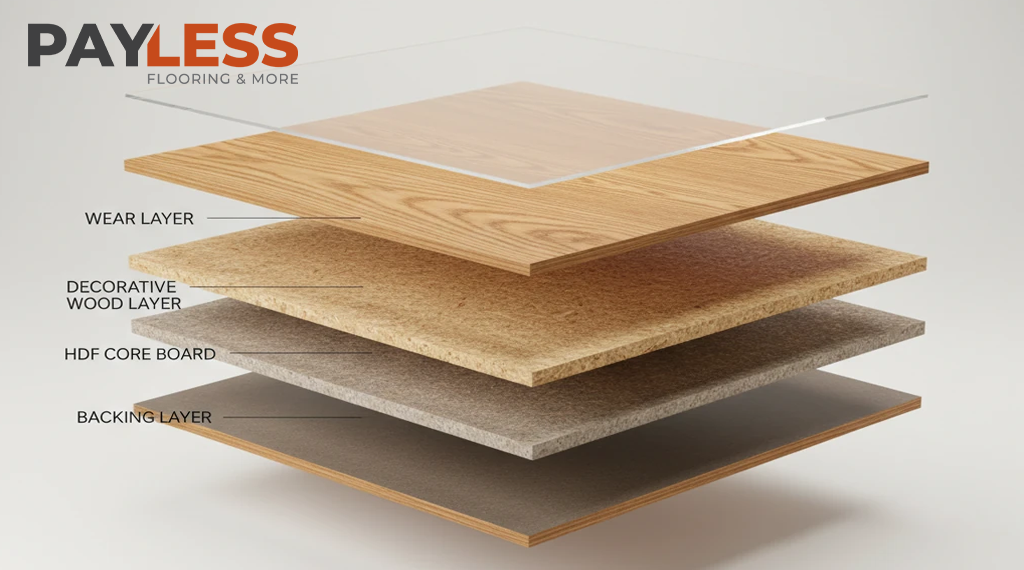
Laminate Flooring Structure Table
| Layer | Function |
|---|---|
| Wear Layer | Protects against scratches, stains, UV fading, and daily wear |
| Decorative Layer | Delivers realistic timber, stone, or design appearance |
| Core Board (HDF) | Delivers strength, stability, and impact resistance |
| Backing Layer | Prevents warping and maintains overall balance |
This multilayer design is the reason why properly selected laminate continues to perform reliably in hightraffic Australian homes while delivering the warm aesthetic of natural timber at a more accessible price point.
General Care
General care forms the foundation of longterm success with laminate flooring. It directly influences how well the floor retains its appearance and structural integrity over time. Most damage occurs gradually through repeated small habits rather than single dramatic events.
In Australian households, abrasive particles like sand and dust are the most common cause of gradual surface wear. These materials are easily brought in on shoes, pet paws, or through open doors. In coastal regions, fine beach sand can act like sandpaper and noticeably accelerate wear. Moisture management is equally critical. Modern laminate provides good water resistance, with many premium ranges offering enhanced protection, but it is not fully waterproof. Standing water or repeated moisture in plank joints can lead to swelling or edge lifting.
Australia’s varied climate makes careful moisture control particularly important.
Consistent preventive habits often deliver better results than occasional intensive cleaning. With proper routine care, many homeowners enjoy their laminate flooring for 15 to 25 years or longer, depending on product quality and household traffic.
General Care Table
| Care Area | Purpose |
|---|---|
| Dry Cleaning | Removes abrasive dust and sand before it causes scratches |
| Spill Control | Prevents moisture from penetrating joints and core |
| Gentle Cleaning Products | Protects the wear layer from chemical damage |
| Furniture Protection | Avoids dents, scratches, and pressure marks |
| Entry Management | Reduces dirt and sand entering the home |
Implementing these basic care practices helps protect your investment and keeps laminate flooring looking newer for longer, especially in demanding Australian environments.
Daily and Weekly Maintenance
Open-plan living spaces common in Australian homes allow dirt and sand to spread quickly, making regular maintenance routines essential for preserving floor condition.
Daily tasks focus on removing visible debris, addressing spills immediately, and preventing abrasive particles from remaining on the surface.
Weekly maintenance includes vacuuming or sweeping high-traffic areas followed by light damp mopping. Households with children, pets, or frequent visitors usually require more frequent attention. In practice, consistent light maintenance is far more effective and safer than infrequent deep cleaning. Coastal homes may need extra dry cleaning during windy or high beach-activity seasons.
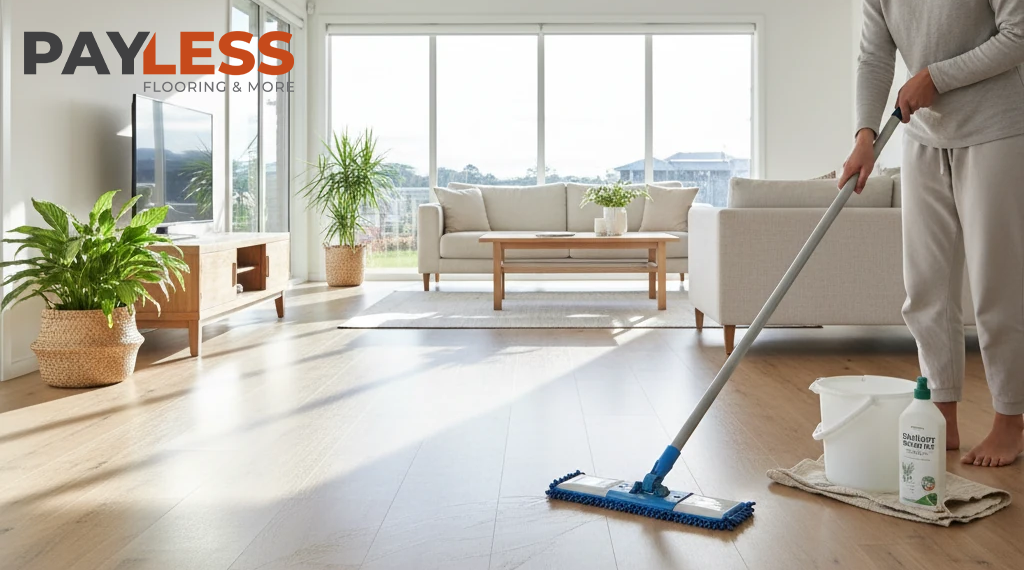
Maintenance Frequency Table
| Frequency | Recommended Action |
|---|---|
| Daily | Spot clean spills and visible debris |
| Every 2–3 Days | Vacuum or sweep high-traffic areas |
| Weekly | Light damp mop with laminate-safe cleaner |
| Monthly | Inspect furniture pads and check floor edges |
| Seasonal | Thorough check of kitchens, entryways, and moisture-prone zones |
Following this practical schedule helps maintain consistent cleanliness and significantly reduces the risk of long-term wear, particularly in sandy coastal locations.
Everyday & Weekly Cleaning
Effective cleaning of laminate flooring requires a controlled approach that limits excess moisture and uses appropriate products. While the surface is durable, improper techniques can reduce its lifespan.
Dry cleaning methods such as sweeping with a soft broom or vacuuming on the hard-floor setting effectively remove grit that causes micro-scratches and dullness. For weekly cleaning, a well-wrung microfibre mop paired with a pH-neutral laminate cleaner is recommended. Some households use a very dilute mild solution, but testing in a small area first is always advisable. Clean section by section and dry the floor immediately.
Excessive water remains a common issue in Australian homes. Residual moisture in joints can cause problems even when the surface appears dry.
Thorough dry cleaning before any damp mopping is especially important after beach days or during dusty summer months.
Recommended Cleaning Tools Table
| TOOL | USE | SAFETY LEVEL |
|---|---|---|
| SOFT BROOM | Microfibre Dust Mop, Daily dust and debris removal | Safe |
| MICROFIBRE MOP | Light surface refreshing | Safe |
| HARD-FLOOR VACUUM | Dry deep cleaning | Safe |
| STEAM MOP | Heat + excess moisture | Unsafe |
| TRADITIONAL WET MOP | Risk of too much water | Unsafe |
Selecting the correct tools plays a key role in preserving the wear layer and ensuring your laminate flooring maintains its attractive appearance for many years.
Deep Cleaning Do’s and Don’ts
Deep cleaning should only be carried out occasionally, usually every two to three months in high‑traffic areas or when the floor starts to appear dull. Using the correct methods during deep cleaning helps restore the floor’s appearance while protecting the laminate structure.
What You Should Do
- Use pH‑neutral cleaners that are specifically designed for laminate flooring to protect the wear layer.
- Work in small sections rather than cleaning the entire floor at once, and always wring the mop thoroughly so it remains only slightly damp.
- After cleaning each section, dry the surface promptly with a clean microfibre cloth or mop to prevent moisture from settling in the plank joints.
What You Should Avoid
- Avoid using harsh chemicals such as bleach, ammonia, or wax‑based cleaners, as these products can damage the protective wear layer.
- Do not flood the floor with water or use overly wet mops, since excessive moisture can seep into plank joints and lead to swelling or edge lifting.
- Steam mops and prolonged moisture exposure should also be avoided to maintain the floor’s structural stability.
Sweeping and vacuuming are expressly desired
Regular dry cleaning is one of the most effective ways to protect laminate flooring in Australian homes.
Dust, sand, and grit act like sandpaper over time, gradually wearing down the protective wear layer and causing visible dullness. This is especially noticeable in coastal regions and homes with frequent indoor-outdoor traffic.
Vacuuming with a hard-floor attachment or using a soft broom for quick daily passes helps prevent long-term damage. In beachside homes or those with pets, more frequent dry cleaning during peak seasons is often beneficial.
Dry Cleaning Frequency Table
| TOOL | USE | SAFETY LEVEL |
|---|---|---|
| Soft Broom | Microfibre Dust Mop, Daily dust and debris removal | Safe |
| Microfibre Mop | Light surface refreshing | Safe |
| Hard-Floor Vacuum | Dry deep cleaning | Safe |
| Steam Mop | Heat + excess moisture | Unsafe |
| Traditional Wet Mop | Risk of too much water | Unsafe |
Consistent dry cleaning is one of the simplest and most effective ways to prevent surface wear before it becomes visible.
only wipe with a damp cloth
Laminate flooring is moisture-resistant but not waterproof. This important distinction should be observed for best long-term results in Australia’s variable climate.
Spills should be wiped immediately with a damp (not wet) microfibre cloth or mop. Water should never be allowed to pool or remain on the surface. The cloth or mop should be wrung until it feels almost dry.
Maintaining proper moisture control, especially in humid regions, helps protect the integrity of your laminate flooring for many years.
how often you should mop?
Mopping frequency depends on household activity levels and location.
For most Australian homes, weekly light damp mopping combined with regular dry cleaning is usually sufficient. Low-traffic areas may need mopping only every 10–14 days. Homes with pets or children benefit from additional spot cleaning while keeping full mopping controlled.
Mopping Frequency Table
| HOUSEHOLD TYPE | RECOMMENDED FREQUENCY |
|---|---|
| Low Traffic Home | Every 10–14 days |
| Standard Family Home | Weekly |
| Pet or Busy Coastal Home | Weekly + daily spot cleaning |
| High Traffic Areas | Weekly (with extra dry cleaning) |
Finding the right balance between effective cleaning and minimal moisture exposure is key to long-lasting laminate performance.
Preventative Maintenance
Preventative maintenance offers one of the most cost-effective ways to protect laminate flooring, particularly in Australia’s sandy and humid conditions.
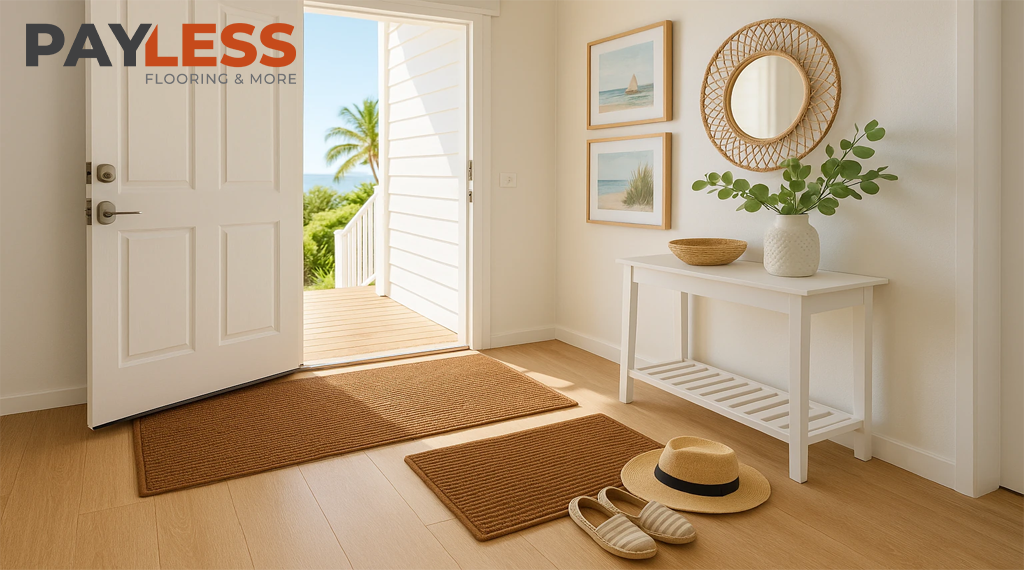
Use of Quality Entry Mats
Place quality entry mats at all doors to trap sand and dirt, and clean them regularly.
Furniture Protection
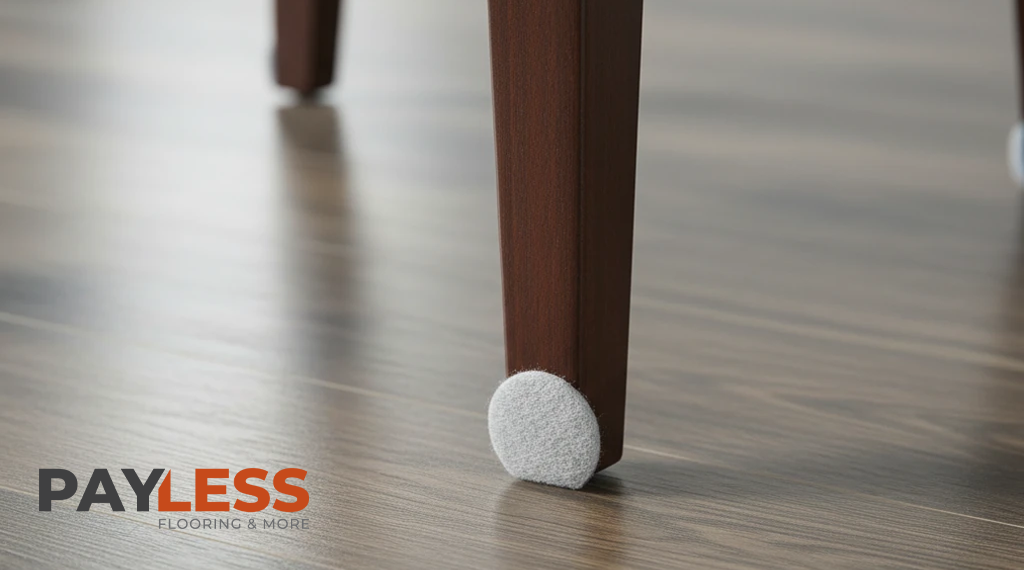
Apply felt or rubber furniture pads under chairs and tables, replacing them as they wear.
Area Rugs in High-Traffic Zones
Use area rugs with non-slip backing in high-traffic zones.
Sunlight Control
Control direct sunlight with curtains or blinds to reduce UV fading.
No-Shoes-Indoors Policy
Consider a no-shoes-indoors policy, especially in beachside homes.
Pet and Plant Care
Keep pet nails trimmed and use saucers under indoor plants.
Humidity Management
Maintain stable indoor humidity to minimise expansion and contraction.
These simple preventative steps can significantly extend the life of your laminate flooring and reduce future maintenance needs.
Spill & Moisture Protection
Kitchens, entryways, dining areas, and zones near bathrooms are the highest-risk areas for spills in Australian homes.
Liquids should be cleaned up immediately and the area dried thoroughly. Even small amounts of standing water can affect plank joints if left untreated.
Quick action on spills one of the most effective ways to prevent permanent moisture damage.
Protecting the Floor from Foot Traffic & Furniture
High foot traffic in hallways and living areas creates gradual wear patterns over time. Dragging furniture is a frequent cause of scratches and dents.
Heavy items should always be lifted or moved with appropriate sliders. Furniture pads should be checked and replaced regularly in busy households.
Removing Marks, Scuffs & Hard Residue
Most everyday marks, including shoe scuffs and sticky residues, can be removed with a damp microfibre cloth and a suitable laminate-safe cleaner. For tougher spots, soften the mark first with a damp cloth and then gently use a plastic scraper. Abrasive tools should be avoided.
Testing any cleaner in an inconspicuous area is recommended before wider use.
Minor Repairs
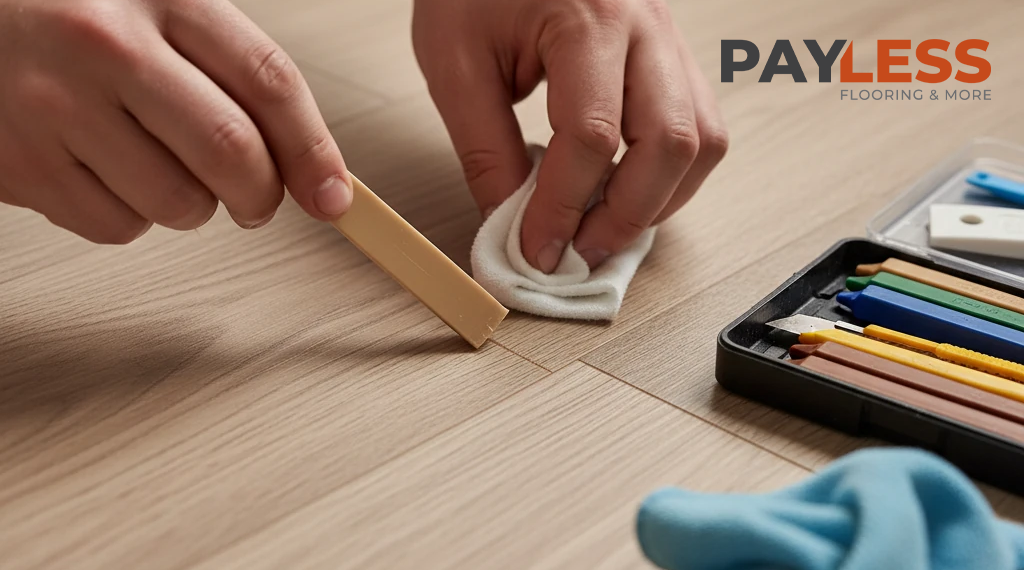
Light surface scratches can often be repaired using colour-matched laminate repair kits or wax sticks available from Australian flooring suppliers. Deeper damage or water-affected planks usually require replacement of individual boards.
Early intervention prevents small issues from developing into larger problems and helps maintain both appearance and property value.
Specialised Care for Busy Home
- Busy households with children, multiple pets, or frequent visitors benefit from more attentive routines.
- Daily vacuuming (including robotic options popular in many Australian homes).
- weekly light mopping, and strong preventative measures such as quality mats and rugs help manage higher activity levels.
- In coastal or high-sand areas, extra attention to entry zones and dry cleaning delivers noticeable benefits.
A simple routine of shoe removal at the door, quick daily sweeps, and controlled weekly mopping allows many active families to keep their floors looking excellent.
Protect Your Laminate for the Long Haul
Long-term performance of laminate flooring depends mainly on consistent maintenance practices tailored to Australian conditions rather than occasional deep cleaning.
Homeowners who focus on regular dry cleaning, effective moisture control, strong preventative habits, and proper tools generally achieve better durability, sustained appearance, and lower long-term costs. With appropriate care whether dealing with beach sand in coastal suburbs or humidity changes across the country quality laminate can continue to provide attractive and functional service for many years.
By following these practical guidelines, laminate flooring can deliver lasting beauty, comfort, and value in Australian homes. Systematic, mindful maintenance remains the most reliable way to protect this investment over decades.
Conclusion
Laminate flooring has become one of the most practical and attractive flooring solutions for modern Australian homes. By combining the natural look of timber with advanced multi‑layer engineering, it offers a balance of durability, affordability, and visual appeal that suits a wide range of lifestyles—from busy family households to relaxed coastal living environments.
One of the key advantages of laminate flooring is its ability to handle the everyday challenges common across Australia, including fine beach sand, high foot traffic, pets, and seasonal humidity changes. The protective wear layer, stable HDF core, and realistic decorative surface work together to create a floor that not only looks like natural timber but also performs reliably under real-life conditions.
However, achieving long-term performance depends largely on proper care and maintenance. Simple habits such as regular dry cleaning, prompt spill management, using laminate‑safe cleaning products, and protecting the floor from furniture scratches can significantly extend the life of the flooring. Preventative steps like entry mats, felt furniture pads, and controlling indoor moisture also play an important role in preserving both appearance and structural stability.
For most households, a routine of frequent sweeping or vacuuming combined with light damp mopping once a week is enough to keep laminate floors looking fresh and well maintained. Consistency is far more effective than occasional heavy cleaning, especially in high‑traffic or coastal homes where dust and sand accumulate quickly.
When properly maintained, quality laminate flooring can deliver 15 to 25 years of reliable performance, maintaining its visual appeal while requiring far less maintenance than traditional hardwood floors.
Ultimately, laminate flooring offers Australian homeowners a smart balance of style, durability, and value. With the right care routine and a few preventative measures, it can remain a beautiful and practical feature of the home for many years to come.