
Short answer: yes — the core of a hybrid plank is 100% waterproof. Stone-polymer composite doesn’t absorb water, full stop. Longer answer — and the one that actually protects your floor and your warranty — is that “waterproof” describes the plank, not every situation a floor can meet. The joins, the subfloor underneath, and the fine print in the warranty all have opinions. This post walks through exactly where hybrid shrugs off water, where it still needs common sense, and the three habits that keep it perfect for decades.
What “Waterproof” Actually Means in Hybrid Flooring
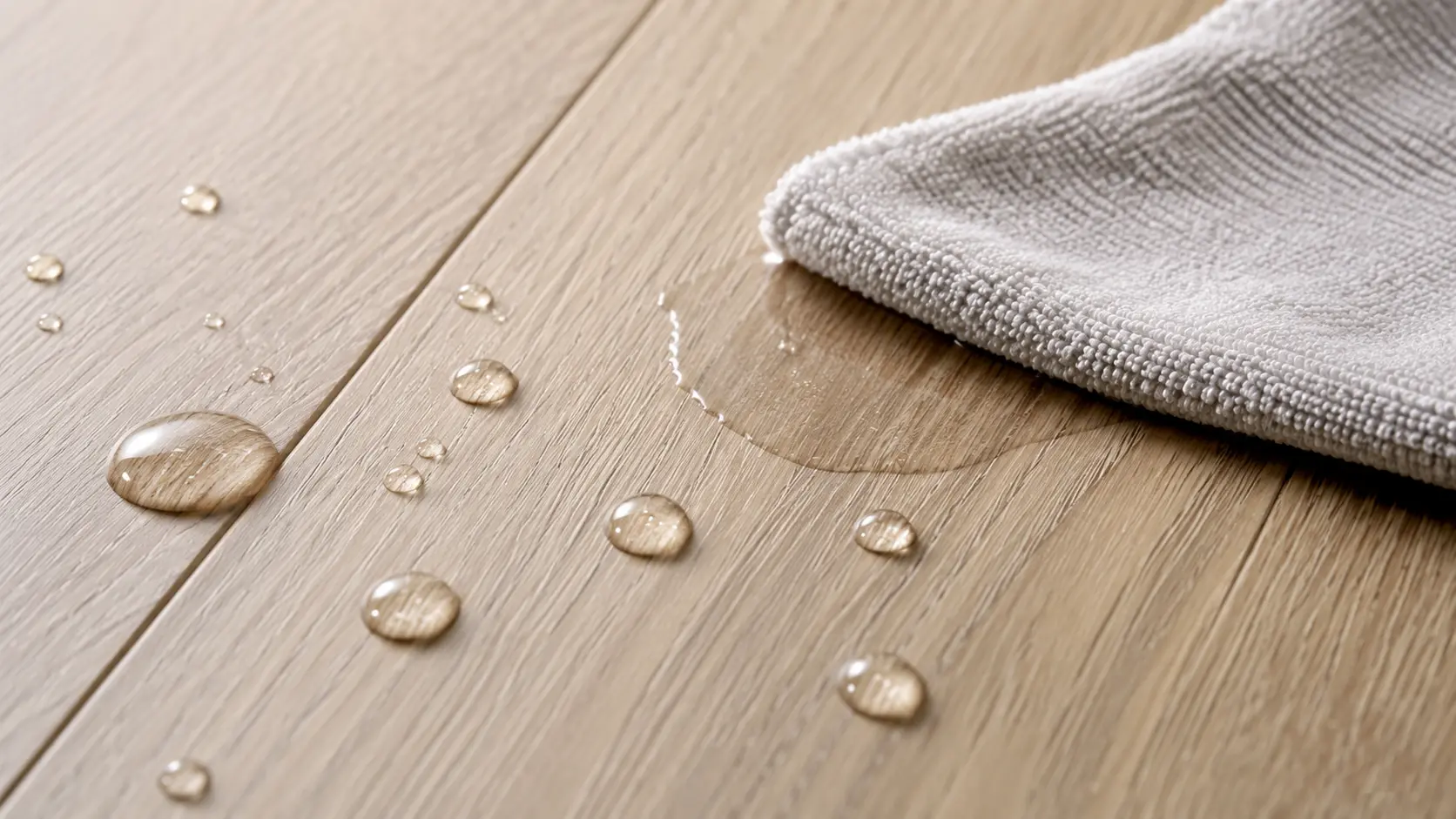
A hybrid plank is a sandwich: a protective wear layer, a printed decorative layer, and a rigid SPC or WPC core — stone or wood polymer composite. The core is the hero here: unlike laminate’s wood-fibre HDF, it physically can’t swell, because there’s nothing in it that absorbs water. Spill a bottle, find it an hour later, wipe it up — the plank genuinely does not care.
What the word doesn’t promise is a sealed tank. A floating floor is hundreds of planks clicked together over a subfloor. Enough standing water for long enough can find its way through joins and around the perimeter — not damaging the planks, but potentially sitting underneath them. The planks are waterproof; the floor as a system is highly water-resistant. That distinction is exactly how manufacturers write their warranties, and understanding it is what separates a happy owner from a warranty dispute.
Where Hybrid Handles Water Brilliantly
- Kitchens — the number-one room people choose hybrid for. Dropped ice, dishwasher drips, sink splash: all routine.
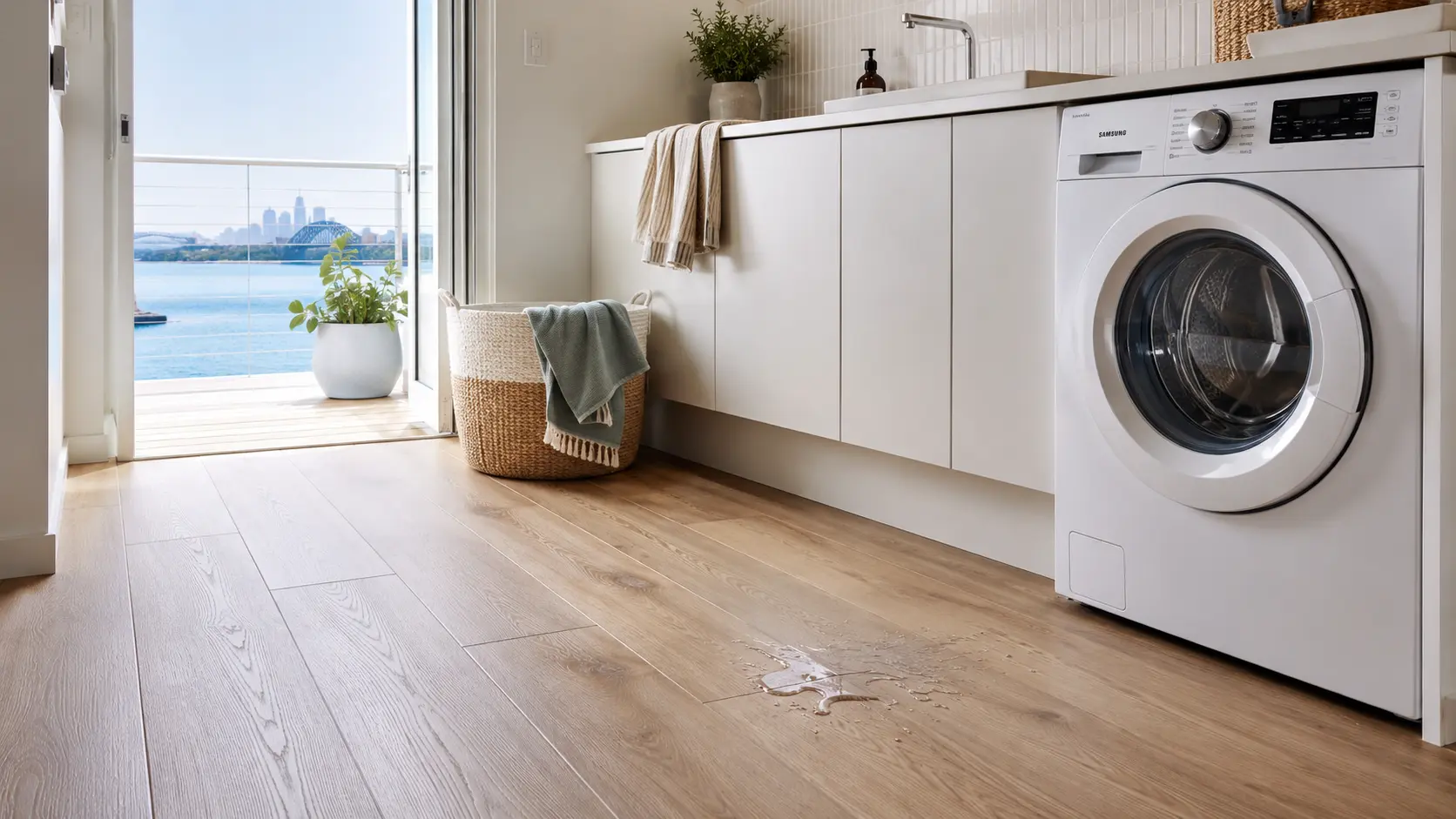
- Laundries — suits the splash-and-humidity reality of a working laundry (a burst hose that floods the room for hours is an insurance event, not a flooring spec — no floating floor is rated for that).
- Entries and hallways — wet shoes, dripping umbrellas, dog paws straight off the beach.
- Open-plan coastal living — out at Belrose and across the Northern Beaches, the humidity swings that make timber move barely register on an SPC core. It’s a big part of why hybrid dominates coastal installs.
If this is the shortlist that brought you here, the current hybrid flooring range shows every colour and spec we stock.
Where You Still Need Care (and What the Warranty Says)
Full bathrooms are their own category. Wet areas in NSW have waterproofing requirements under the building rules (AS 3740 governs waterproofing of domestic wet areas), and the waterproofing there lives in the substrate — not in whatever you lay on top. Some hybrid products are warranted for bathrooms with specific installation methods, many exclude them; it’s a product-by-product answer we’ll give you straight at the measure.
Standing water still deserves respect. “Wipe up spills promptly” appears in every hybrid warranty for a reason — not because an hour-old puddle hurts the plank, but because water left overnight can migrate through joins to the subfloor.
The subfloor has a moisture story too. On Sydney’s concrete slabs, moisture can come from below as well as above. A proper install includes checking slab moisture and using the right underlay barrier — one of those invisible steps that decides how a floor performs in year ten, and one more reason a measured quote beats a guessed one.
Steam mops: just don’t. They force hot vapour into joins and void most warranties. A damp (not wet) flat mop is all a hybrid floor ever needs.
Hybrid vs Laminate vs Timber in Wet-Prone Rooms
| Hybrid | Laminate | Engineered timber | |
| Core reaction to water | None — mineral-polymer core | Swells if water penetrates (48–72 hr rated cores buy you time) | Real wood — will move and mark |
| Kitchen / laundry | Yes | Not recommended | Not recommended |
| Verdict | The wet-zone default | Great everywhere dry | Beautiful — keep it out of wet zones |
For the full head-to-head on price, feel and durability, read hybrid vs laminate flooring: which is best for your home?
Three Habits That Keep a Hybrid Floor Waterproof for Decades
- Wipe standing water when you see it — minutes matter to the warranty, not to the plank.
- Mats at external doors and under pet bowls — the two places water shows up daily.
- Damp mop, pH-neutral cleaner, no steam — the entire maintenance manual in nine words.
FAQs
Can I put hybrid flooring in a bathroom?
Sometimes — it depends on the specific product’s warranty and installation method, and the room’s waterproofing must already comply with wet-area rules. Ask us about the ranges that carry bathroom coverage before you plan on it.
What happens if my washing machine leaks overnight?
The planks will almost certainly be fine; the concern is water trapped underneath. Dry the room fast, and if a large volume went down, have the floor checked — boards can be lifted and re-laid, which is a repair laminate can’t usually offer.
Is hybrid more waterproof than laminate?
Yes, categorically — laminate’s best ratings buy you 48–72 hours against a spill; hybrid’s core is unaffected by water altogether. That’s the single biggest difference between the two products.
Do I need to seal hybrid flooring?
No — there’s nothing to seal. The wear layer is the finished surface. Save the sealer budget for a nicer mat at the front door.
Want the Straight Answer for Your Rooms?
Bring your room list — kitchen, laundry, bathroom, the lot — to our Belrose or Castle Hill showroom and we’ll tell you exactly which ranges are warranted where. Or skip a step and book a free measure and quote — we check the subfloor moisture story while we’re there.