
Jute rugs have become a popular choice for homeowners looking for a natural, affordable, and stylish flooring solution. Known for their organic texture and earthy appearance, jute rugs work well in a wide range of interiors, from coastal Australian homes to modern apartments and relaxed family living spaces. While many people purchase readymade rugs, creating a DIY jute rug can be a rewarding project that allows you to customise the size, shape, and design to suit your home. With the right materials and a few simple techniques, it is possible to create a woven jute rug that looks both practical and professionally finished. In this guide, we’ll explain what jute is, the materials needed to make a rug, how woven jute rugs are constructed, and the simple steps involved in creating your own. We’ll also cover customisation ideas, maintenance tips, repair options, and why jute remains one of the most widely used natural fibres in rug manufacturing.
What is Jute?
Jute is a natural plant fibre that comes from the stem of the jute plant, which is typically grown in warm, humid regions. It is widely used in home furnishings and is especially popular in rug making because of its strength, natural texture, and sustainable nature.
Origin and Cultivation
Jute is cultivated mainly in tropical climates where rainfall is high and conditions support fast plant growth. One of its biggest advantages is that it grows quickly and can be harvested every year without requiring heavy use of fertilisers or intensive farming methods. This makes it a highly renewable and environmentally responsible fibre compared to many synthetic alternatives.
Appearance and Texture
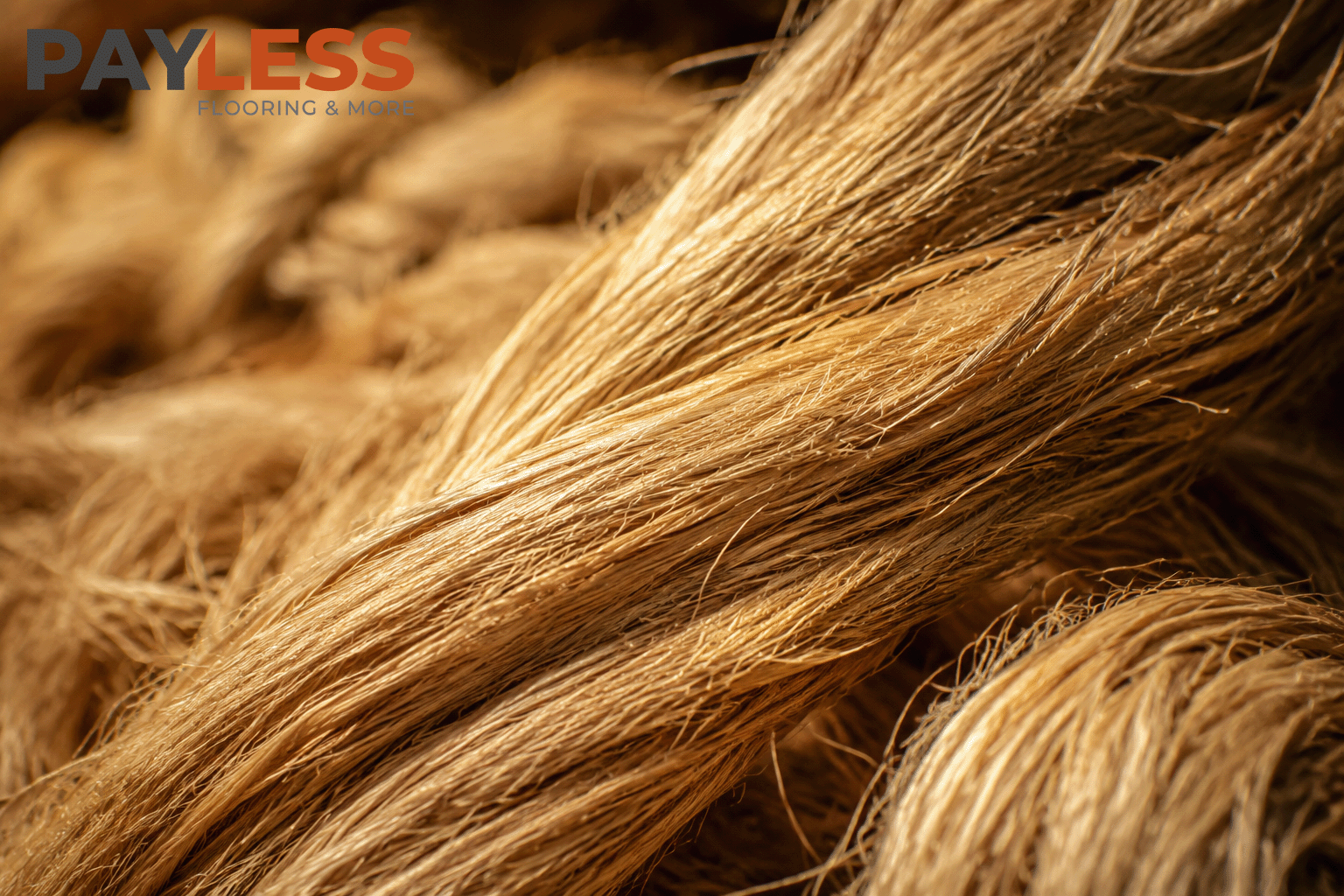
Jute is often called the golden fibre because of its natural goldenbrown colour and subtle sheen. In terms of texture, it sits somewhere between soft and slightly coarse, which gives it a natural, organic feel underfoot. This texture variation is actually one of its design strengths, as it creates depth and character in rugs rather than a perfectly uniform finish.
Environmental Benefits
From a sustainability perspective, jute is considered one of the most ecofriendly fibres used in interior products. It is fully biodegradable and renewable, meaning it breaks down naturally without harming the environment. For homeowners who are choosing more sustainable décor options, jute is often seen as a responsible and lowimpact material choice.
Common Uses in Home Décor
In interior design, jute is widely used beyond just rugs. It appears in baskets, storage solutions, decorative accessories, and even ropebased design elements. However, it is in rugs where it has become most popular due to its ability to bring warmth and natural texture into living spaces.
Best Use Cases for Rugs
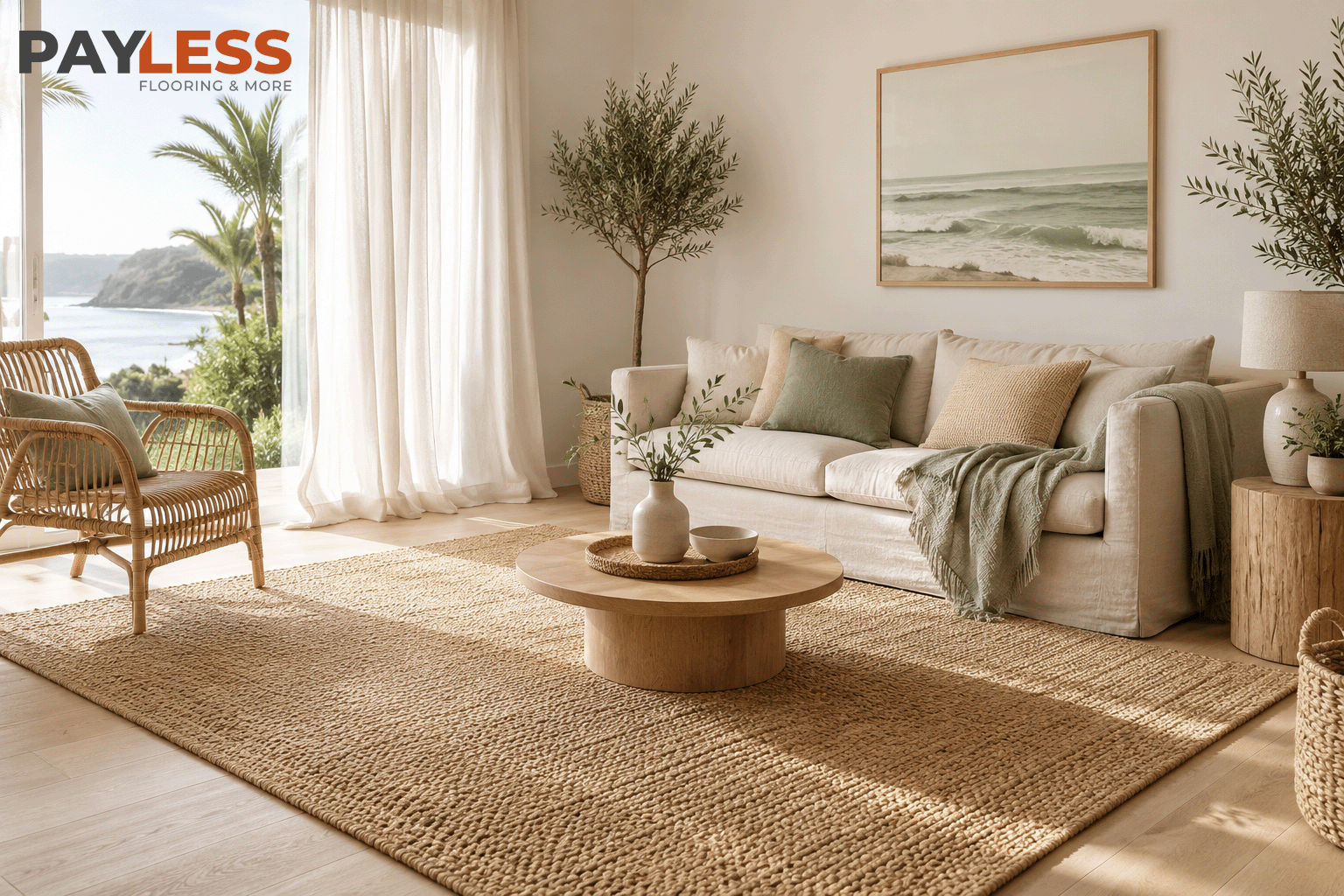
Jute rugs are best suited to indoor environments where moisture exposure is limited and foot traffic is moderate. They work particularly well in living rooms, bedrooms, entryways, and relaxed family spaces. In Australian homes, they are often used in coastal, Scandinavian, rustic, and contemporary interiors because they pair easily with timber flooring and neutral colour palettes.
Essential Materials
Making a jute rug, whether as a DIY project or for understanding how woven rugs are produced, requires a combination of natural fibres, basic tools, and supportive materials that help create structure, durability, and a clean finish. Choosing the right materials is important because it directly affects the strength, texture, and overall appearance of the final rug.
Jute Fibre as the Core Material
The most important component is, of course, the jute fibre itself. This natural fibre forms the main structure of the rug and is responsible for its strength and organic texture. In most cases, jute is spun into long strands or ropes that can be easily woven or braided. The quality of the fibre plays a major role in how smooth or rough the final rug feels, as well as how well it holds its shape over time.
Fibre Quality and Grading
Not all jute fibres are identical. Highergrade jute tends to be softer, more consistent in colour, and easier to work with, while lowergrade fibres can appear uneven or slightly rougher. For rug making, medium to highgrade fibre is usually preferred because it provides a better balance between durability and workability.
Base Support Material
A stable base is essential when constructing a jute rug, especially in DIY projects. This base acts as the foundation that keeps the woven structure secure and prevents it from loosening over time.
Common Base Options
In many rug making processes, materials such as heavy cotton fabric, hessian backing, or woven mesh are used as the underlying support. These materials help maintain the shape of the rug and make it easier to apply consistent weaving patterns across the surface.
Adhesives and Binding Materials
Depending on the method used, adhesives or binding agents may be required to secure the jute fibres in place. In professional rug manufacturing, natural or synthetic adhesives are sometimes used to strengthen the backing and improve longterm durability.
Edge Finishing Materials
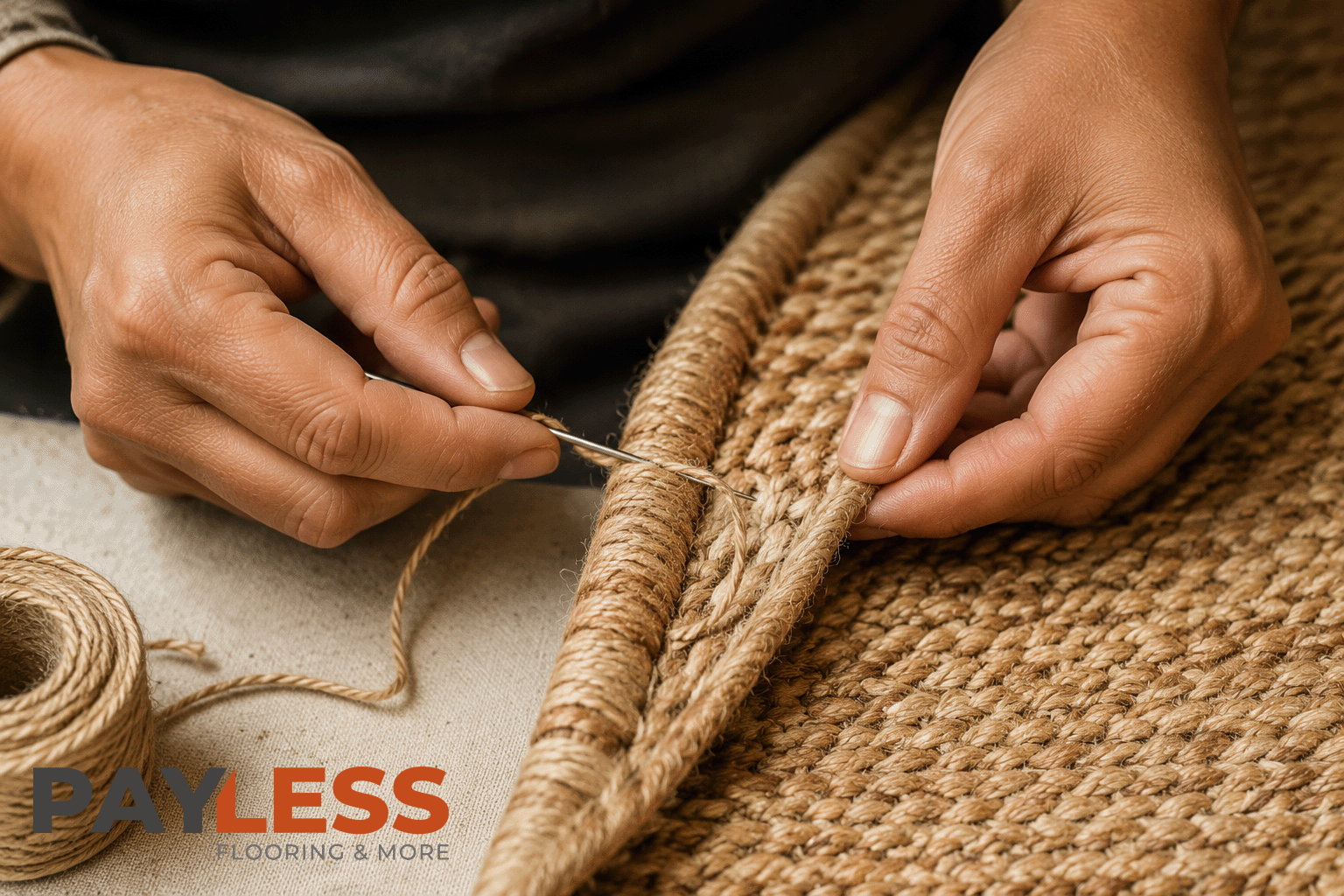
To prevent fraying, the edges of a jute rug are often reinforced using fabric tape, stitched binding, or additional woven layers. This finishing step is important not only for durability but also for achieving a clean, professional appearance.
Basic Tools Required
While jute rug making does not require highly complex machinery for DIY versions, a few essential tools are necessary to ensure accuracy and consistency throughout the process.
Measuring and Cutting Tools
Accurate measurement tools are needed to ensure the rug maintains the correct dimensions. Cutting tools are also used to trim jute strands to equal lengths, which helps create a more uniform woven surface.
Weaving or Knotting Tools
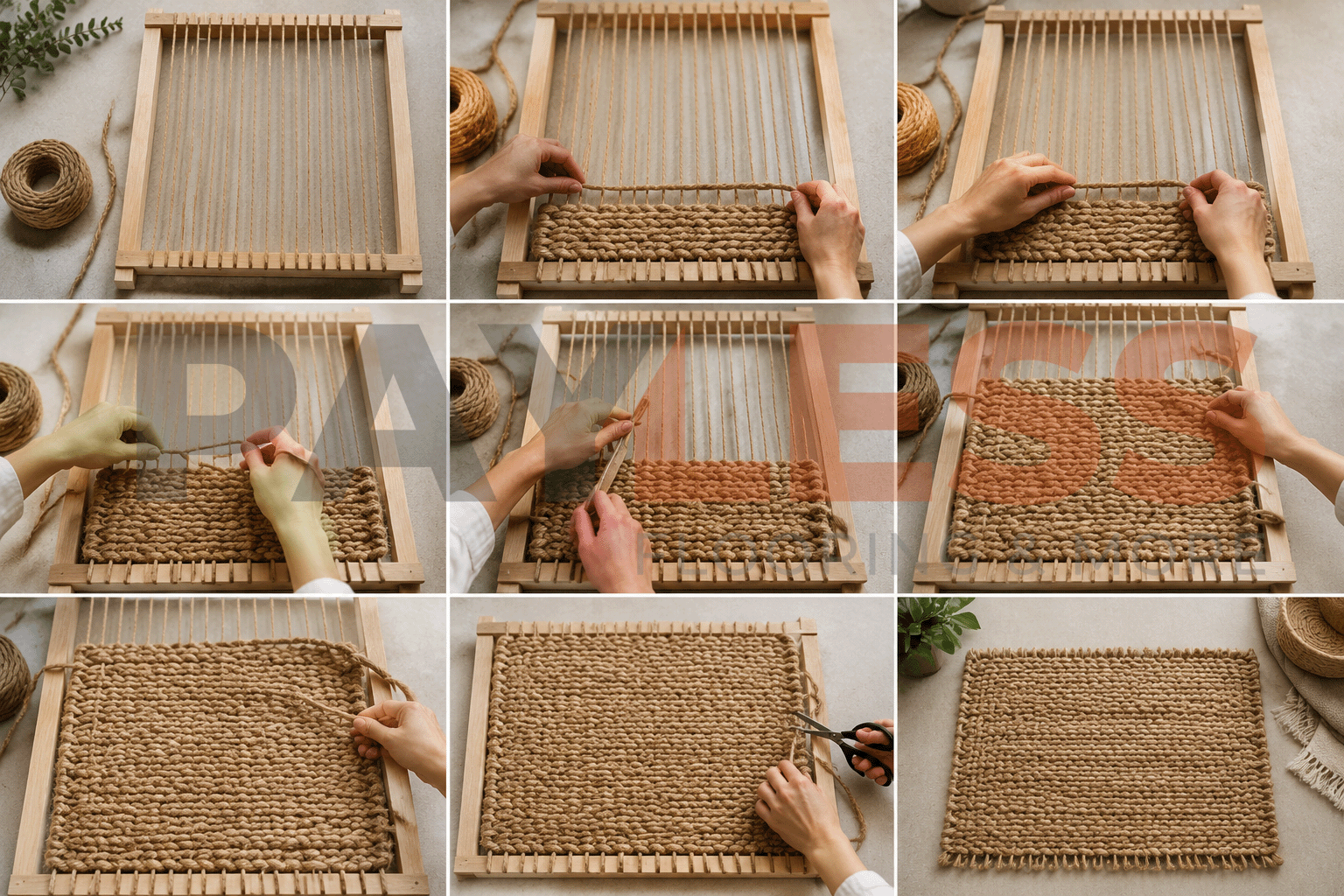
Depending on the chosen technique, simple hand looms, hooks, or weaving frames may be used to guide the structure of the rug. These tools help maintain tension and ensure the fibres are evenly distributed.
How a Woven Jute Rug Is Made
Woven jute rugs are created through a structured process that combines traditional craftsmanship with practical weaving techniques. The goal of this process is to transform raw jute fibres into a durable, evenly woven surface that can be used in everyday home environments.
Whether produced in a workshop or at scale in manufacturing facilities, the core principles of weaving remain quite similar.
Fibre Preparation and Spinning
The process begins with preparing raw jute fibres. These fibres are cleaned, sorted, and aligned to remove impurities and ensure consistency.
Once prepared, they are spun into long, continuous strands or yarns that can be used for weaving.
Importance of Fibre Consistency
Consistency at this stage is essential because uneven fibres can lead to irregular textures in the final rug. High quality woven jute rugs rely on uniform strands to ensure a balanced appearance and stable structure.
Setting Up the Loom
Once the fibres are ready, the next step is setting up the loom. The loom acts as the framework that holds the fibres in place during the weaving process. Warp threads are stretched vertically, forming the foundation of the
Tension Control in Weaving
Proper tension is critical during this stage. If the warp threads are too loose, the rug may lose shape over time. If they are too tight, the fibres may become distorted or uneven.
Weaving the Jute Fibres
The actual weaving process involves interlacing horizontal threads (weft) through the vertical warp threads. This creates a tight, structured surface that gradually forms the rug.
Traditional Weaving Patterns
Many woven jute rugs use simple overunder patterns that highlight the natural texture of the fibre. This simplicity is part of the aesthetic appeal, especially in modern Australian interiors where natural materials are highly valued.
Finishing and Edge Binding
Once weaving is complete, the rug is removed from the loom and the edges are secured. This step is essential to prevent fraying and ensure longterm durability.
Surface Trimming and Quality Check
After binding, the surface is often trimmed to create a more even texture. A final inspection ensures that the weave is consistent and free from loose threads or weak points.
| Stage | Description |
|---|---|
| Fibre Preparation | Cleaning, sorting, and spinning raw jute into usable strands |
| Loom Setup | Arranging warp threads and preparing weaving structure |
| Weaving Process | Interlacing fibres using overunder weaving technique |
| Edge Finishing | Securing borders to prevent fraying and improve durability |
| Final Inspection | Checking texture consistency, strength, and overall finish |
DIY Jute Rug: Step-by-Step Instructions
Creating your own jute rug is easier than it sounds. By following these clear steps, you can make a durable and stylish rug that adds natural texture to your home. Working with jute fibres is straightforward, but maintaining even tension and neat edges will make your rug look professional.
| Step | Action | Details / Tips |
|---|---|---|
| 1 | Gather Materials | Prepare jute rope or yarn, scissors, ruler, hot glue or fabric adhesive, and optional non slip backing |
| 2 | Prepare Workspace | Use a flat surface with good lighting and place a protective sheet under your work area |
| 3 | Create Base Strands | Lay several jute strands parallel to each other to form the base of the weave |
| 4 | Start Weaving | Weave horizontal strands through the base using an over under pattern |
| 5 | Keep Weaving Even | Maintain consistent tension and check alignment regularly to keep the pattern neat |
This method ensures a sturdy, attractive rug that highlights the natural beauty of jute. Once complete, your DIY rug can serve as a functional piece in living rooms, hallways, or bedrooms, adding warmth and an earthy feel.
Enhancements and Customization Techniques
Once the basic jute rug is completed, there are several ways to enhance its appearance and make it more suited to your personal interior style. Customising a jute rug allows you to transform a simple natural piece into something more decorative, unique, and aligned with your home design. In Australian interiors, especially in coastal and modern homes, subtle customisation is often preferred to maintain the natural and relaxed feel of jute.
Adding Colour Accents
One of the simplest ways to enhance a jute rug is by introducing soft colour accents. This can be done by integrating dyed jute strands or adding fabric dyed sections during the weaving process. The goal is to maintain the natural base while introducing gentle contrast that does not overpower the organic look.
Creating Pattern Variations
Pattern variation can significantly change the visual impact of a jute rug. Instead of a uniform weave, alternating tighter and looser sections or changing weaving direction can create subtle geometric effects. These variations add depth without compromising the minimalist appeal of jute.
Layering Textures
Texture layering involves combining jute with other natural fibres such as cotton or wool. This creates a richer surface feel and makes the rug more visually interesting while still keeping its natural aesthetic. It is particularly effective in living rooms and bedrooms where comfort is important.
Decorative Edge Finishing
Edge detailing is another effective way to customise a jute rug. Braided borders, stitched trims, or wrapped edges can give the rug a more refined and finished look. This small detail can elevate a simple DIY rug into a more polished design piece.
| Enhancement Type | Method | Effect |
|---|---|---|
| Colour Accents | Add dyed fibres or coloured sections | Creates soft contrast and visual interest |
| Pattern Variation | Change weave direction or density | Adds a subtle geometric or textured effect |
| Texture Layering | Combine jute with wool or cotton | Creates a softer and richer surface feel |
| Edge Finishing | Braiding or stitching the edges | Gives a cleaner and more professional look |
Why are Jute Fibers Used to Make Rugs?
Jute fibres have become one of the most widely used natural materials in rug manufacturing because they offer a strong balance of durability, affordability, and natural aesthetic appeal. In both traditional weaving and modern interior styling, jute is valued for the way it brings an organic, grounded feel into a space without looking artificial or overly processed.
Strong Natural Durability
One of the main reasons jute is used in rug production is its impressive natural strength. Even though it is a plant based fibre, jute has high tensile strength, which means it can withstand weaving, shaping, and everyday residential use without easily breaking down. This makes it suitable for rugs that are designed for low to moderate foot traffic in homes.
Natural Texture and Aesthetic Appeal
Jute has a distinct earthy texture that sits between soft and slightly coarse. This natural finish is one of its biggest design advantages because it adds depth and warmth to interiors without overpowering the space. In Australian homes, especially coastal and minimalist styles, this understated look is highly desirable.
Sustainable and Eco-Friendly Material
Another important reason for its popularity is sustainability. Jute is biodegradable and renewable, and it grows quickly with minimal need for chemical inputs. This makes it a more environmentally responsible option compared to many synthetic fibres used in rug manufacturing today. For homeowners who prefer ecoconscious interior choices, jute is a natural fit.
CostEffective Natural Fibre
Jute also offers excellent value for money. It delivers a natural, premium look at a relatively low cost compared to materials like wool or silk. This affordability makes it accessible for a wide range of households, from rental apartments to large family homes, without compromising on style.
Versatility in Interior Design
Jute blends easily with a variety of interior styles, which is another reason it is widely used in rugs. It pairs well with timber flooring, neutral colour schemes, and modern furniture, while also fitting comfortably into rustic and coastal design themes. Its neutral appearance allows it to support a room’s design without dominating it visually.
Key Reasons Jute Is Used in Rugs
| Reason | Explanation |
|---|---|
| Natural strength | Durable fibre that withstands weaving and everyday residential use |
| Texture | Adds organic warmth and visual depth to interior spaces |
| Sustainability | Renewable and biodegradable natural fibre |
| Affordability | More cost effective compared to many premium natural fibres |
| Design flexibility | Suitable for modern coastal and rustic interior styles |
Where Can I Get a Woven Jute Rug?
Finding a quality woven jute rug requires knowing where to look, whether you prefer shopping instore or online. Australian homeowners have several options that combine accessibility, variety, and assurance of quality.
Specialty Rug Stores
Specialty rug and carpet stores are excellent places to find woven jute rugs. These stores often carry a curated selection of highquality rugs made from natural fibres. Visiting in person allows you to feel the texture, assess the weave, and visualise how the rug will fit in your space.
Homewares and Furniture Retailers
Major homewares and furniture chains in Australia often stock woven jute rugs as part of their natural or ecofriendly product lines. These retailers provide a wide range of sizes and styles, making it easier to match your existing décor. Some stores even offer custom options for a more personalised touch.
Online Marketplaces
Online shopping has made it convenient to purchase woven jute rugs from anywhere in Australia. Many ecommerce platforms offer detailed descriptions, images, and customer reviews. Look for websites that specify fibre content, dimensions, and care instructions. Online shopping also allows you to compare prices easily and find unique designs from smaller, boutique suppliers.
Artisan and Local Markets
For homeowners who want a handcrafted or unique jute rug, local artisan markets are worth exploring. These markets often feature locally woven rugs that support Australian artisans. The advantage here is receiving a one-of-a-kind product with a story, while also encouraging local craftmanship.
Custom and Made-to-Order Rugs
Some rug specialists offer custom weaving services. You can choose the size, pattern, and sometimes even the dye or finish for your jute rug. This option ensures that the rug perfectly fits your space and interior style.
Source Advantages
| Source | Key Advantage |
|---|---|
| Specialty rug stores | High quality selection and the ability to see and feel the rug before buying |
| Homewares and furniture retailers | Wide variety of styles and often eco friendly product lines |
| Online marketplaces | Convenient shopping with easy price and style comparison |
| Artisan and local markets | Handcrafted and unique designs that support local makers |
| Custom weaving services | Custom size pattern and style tailored to your home |
Protecting Jute from Moisture and Staining
Jute rugs are loved for their natural, earthy look, but they do require a bit of care when it comes to moisture and staining. Because jute is a plantbased fibre, it is naturally more sensitive to water compared to synthetic rug materials. With the right precautions, however, you can keep a woven jute rug looking fresh and longlasting in an Australian home environment.
Why Moisture Is a Concern for Jute
Jute fibres tend to absorb moisture quickly, which can lead to weakening of the material over time. If exposed to excess water or high humidity for prolonged periods, the fibres may swell, lose shape, or develop discolouration. This is why jute rugs are best suited to indoor, dry areas rather than bathrooms or laundry spaces.
Everyday Spill Protection
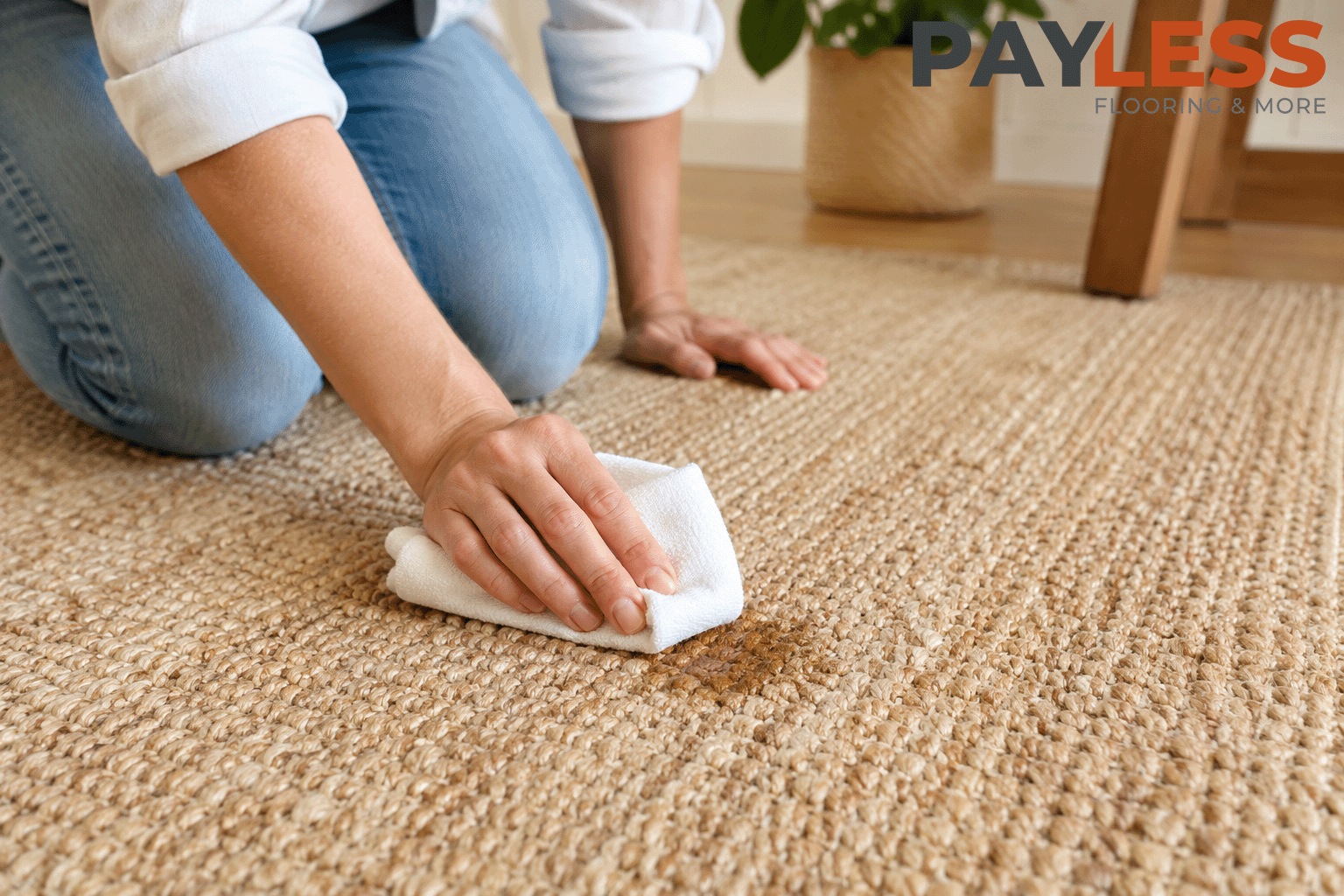
In daily use, quick action is the key to preventing stains. Small spills should be blotted immediately rather than rubbed, as rubbing can push moisture deeper into the fibres. Using a dry cloth or paper towel helps absorb liquid before it settles into the weave.
Preventing LongTerm Damage
Placing a jute rug in areas with controlled humidity and minimal direct exposure to moisture significantly improves its lifespan. In Australian coastal homes, where humidity can be higher, it is especially important to avoid placing jute rugs near open balconies, large windows with condensation, or entryways exposed to rain.
Using Protective Layers
Many homeowners choose to place a nonslip or protective underlay beneath their jute rug. This not only helps with grip but also reduces direct contact with the floor, which can sometimes trap moisture. It also improves airflow, which helps the fibres stay dry and stable.
| Situation | Recommended Action | Result |
|---|---|---|
| Small liquid spill | Blot immediately with a dry cloth | Helps prevent deep staining |
| High humidity area | Use a dehumidifier or avoid placing the rug there | Reduces fibre damage |
| Entryway use | Add a protective underlay | Limits moisture exposure |
| Cleaning routine | Use light vacuum cleaning only | Helps maintain fibre integrity |
Refinishing and Repair Options
Over time, even a wellmaintained jute rug may show signs of wear, especially in busy Australian households where foot traffic, furniture movement, and everyday use are unavoidable. The good news is that woven jute rugs can often be refreshed or repaired, extending their lifespan and keeping them looking presentable without needing full replacement.
Surface Refreshing Techniques
One of the simplest ways to refresh a jute rug is through light surface maintenance. Gentle vacuuming helps lift dust and restore the natural texture of the fibres. In some cases, lightly brushing the surface with a softbristle brush can help realign fibres and improve the overall appearance, especially in flattened areas caused by furniture.
Handling Loose Fibres and Fraying
Loose fibres and minor fraying are common in natural jute rugs over time. These can usually be managed with careful trimming or by securing the affected area with natural fabric glue. In woven rugs, reinforcing the edges early can prevent small issues from becoming larger structural problems.
Edge Repair and Reinforcement
The edges of a jute rug are often the first areas to show wear. If fraying occurs, rebinding the edges with fabric tape or stitching can restore both durability and appearance. In more advanced cases, professional rug repair services can reweave or reinforce damaged sections to maintain the rug’s original structure.
Professional Restoration Options
For higherquality woven jute rugs, professional restoration can be a worthwhile option. Specialists can repair uneven weaving, restore shape, and strengthen weakened fibres. This is particularly useful for larger rugs or pieces used in prominent living areas where appearance matters.
| Issue | Repair Method | Outcome |
|---|---|---|
| Flattened fibres | Light brushing and gentle vacuuming | Helps restore the rug texture |
| Loose threads | Careful trimming or sealing | Prevents further unraveling |
| Edge fraying | Rebinding or stitching the edges | Strengthens the rug borders |
| Structural damage | Professional repair service | Helps extend the rug lifespan |
Conclusion
A woven jute rug is one of the most practical and naturally stylish choices for modern homes, especially in Australian interiors where relaxed living, natural textures, and sustainable materials are highly valued. From its organic look to its eco friendly properties, jute continues to stand out as a material that balances design appeal with everyday functionality.
Why Jute Rugs Remain a Popular Choice
Jute rugs offer a unique combination of warmth, simplicity, and natural character that fits effortlessly into a wide range of interior styles. Whether used in coastal homes, contemporary apartments, or minimalist living spaces, they bring a grounded and calming presence that synthetic materials often struggle to replicate.
Balancing Style and Practical Use
While jute is not designed for highmoisture or heavyduty environments, it performs exceptionally well in low to medium traffic areas when properly maintained. With the right care, including moisture protection and occasional surface refreshing, a woven jute rug can remain a longlasting feature in the home.
A Sustainable Interior Investment
Choosing jute also supports a more sustainable approach to interior design. As a renewable and biodegradable fibre, it aligns with the growing demand for environmentally responsible home décor solutions without compromising on visual appeal or comfort.
Aspect Key Insight
| Feature | Description |
|---|---|
| Style Value | Natural timeless and versatile design |
| Practical Use | Best suited for indoor low to medium traffic areas |
| Maintenance | Easy to maintain with simple care routines |
| Sustainability | Eco friendly and renewable natural fibre |
| Overall Benefit | Combines style function and affordability |